Signs Your Vitals Camera Model Needs Retraining
How to recognize when to retrain a vitals camera model after a hardware revision or new deployment environment, and the drift signals OEMs should track.
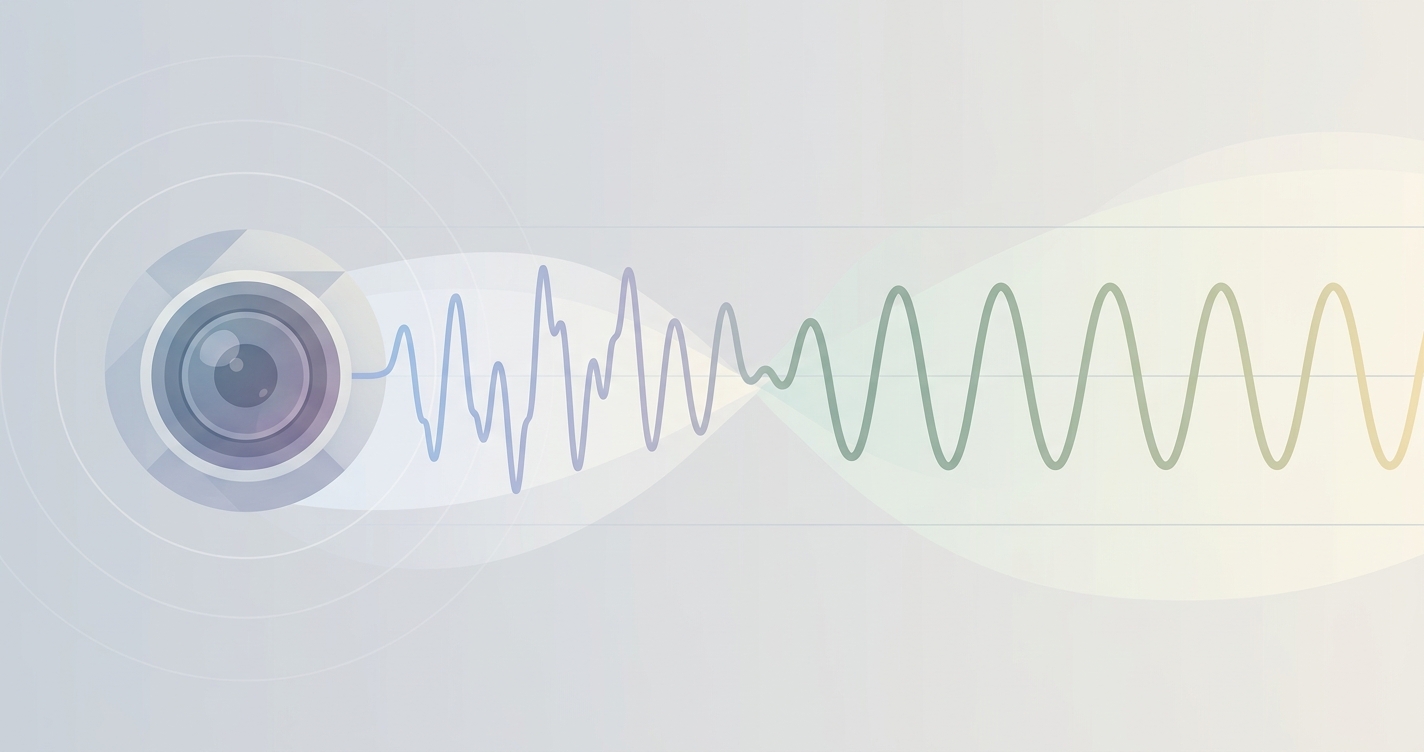
A contactless vitals feature that passed validation at launch is not a finished product. It is a snapshot of one model against one set of cameras, optics, and lighting conditions. The moment a hardware team swaps a sensor, revises the lens stack, ships to a new region, or pushes a firmware update that touches the image pipeline, the statistical world the model learned from begins to shift. Knowing when to retrain a vitals camera model is therefore less about a calendar and more about reading a specific set of degradation signals before they reach a customer pilot or a regulatory review. For hardware OEMs, automotive Tier-1 suppliers, and IoT device makers, those signals are the difference between a quiet recalibration and a field-wide accuracy complaint.
A 3-way cross-dataset analysis of remote photoplethysmography models found that generalization techniques cut mean absolute heart-rate error from over 13 beats per minute to below 3 beats per minute, a gap that shows how severely an unadapted model can degrade when the input domain changes. Source: Wang et al., cross-dataset rPPG study, 2023.
Knowing when to retrain a vitals camera model
Remote photoplethysmography (rPPG) models extract a blood-volume pulse from tiny color or intensity changes across skin pixels. Because those changes are minute, the model is acutely sensitive to anything that alters how light reaches the sensor and how the sensor encodes it. This is why camera-specific vitals model drift is rarely a slow, graceful decline. It often arrives as a step change tied to a single event: a new image signal processor (ISP), a different infrared cut filter, an updated auto-exposure curve, or a deployment into cabins and rooms with lighting the training set never contained.
The literature on production machine learning separates two failure modes that map cleanly onto vitals sensing. Data drift describes a change in the distribution of inputs while the underlying physiology stays the same. Concept drift describes a change in the relationship between inputs and the target. A hardware revision usually triggers data drift, because the same heartbeat now produces a different pixel signature. A new use case, such as moving a model from a still clinical kiosk to a moving vehicle, can trigger both at once.
The practical question is how to tell which signals justify a full retrain versus a lighter recalibration. The table below frames the most common triggers and the maintenance response each typically warrants.
| Trigger event | Drift type | Typical accuracy symptom | Usual response |
|---|---|---|---|
| New camera sensor or module | Data drift | Sudden bias in heart-rate output across all users | Full retrain on new sensor data |
| Lens or IR filter revision | Data drift | Signal-to-noise drop, more dropped readings | Targeted retrain plus recalibration |
| ISP or firmware image-pipeline update | Data drift | Intermittent error spikes after OTA update | Re-validation, retrain if confirmed |
| New deployment region or lighting | Data + concept drift | Error concentrated in specific conditions | Augmented retrain on new domain |
| New user population or use case | Concept drift | Error skewed across demographics or posture | Retrain with representative data |
| Gradual sensor aging | Slow data drift | Mild error creep over months | Scheduled recalibration |
Reading the drift signals
Most teams discover drift through one of a handful of recurring symptoms. Treating these as diagnostic flags, rather than noise, is what separates a maintainable deployment from a reactive one.
- A consistent bias appears in reported heart rate or respiration, where the device reads several beats high or low for nearly everyone. A systematic offset almost always points to a hardware or pipeline change rather than user behavior.
- Coverage drops, meaning the share of sessions that return a confident reading falls. The model is increasingly abstaining because the incoming signal no longer matches what it expects.
- Error variance widens even if the average looks acceptable. A model that was tight at launch but now produces occasional large outliers is showing early instability.
- Failures cluster in a specific condition, such as low light, a particular skin tone range, or one vehicle trim with different cabin glass. Clustered error is a signature of IoT health sensing model accuracy decline driven by an unrepresented domain.
- Customer-reported discrepancies rise against a reference device, often the first signal a team sees because it surfaces through support tickets rather than internal telemetry.
The hardest cases are the ones where the average metric still looks healthy. Researchers studying rPPG in challenging environments have shown that motion artifacts and ambient light shifts can degrade signal quality long before a headline accuracy number moves, because confident readings mask a shrinking pool of usable frames. Monitoring only mean error hides this. Tracking coverage, confidence distribution, and per-condition breakdowns is what makes model recalibration signals visible early.
Industry Applications
Automotive in-cabin sensing
Driver monitoring is the most demanding case for drift management because the cabin is an uncontrolled optical environment and the vehicle program lifecycle spans years. A mid-cycle camera supplier change, a switch from one IR illuminator to another, or a new sunroof that alters interior light can each shift the input domain. Tier-1 suppliers managing multiple platforms often find that a model validated on one vehicle line degrades when carried to another without retraining, because seat geometry, camera angle, and glazing differ.
Iot and smart home devices
Smart mirrors, panels, and home health hubs face wide variation in user-side lighting and mounting. Here drift is frequently triggered on the demand side: a firmware update that changes auto-exposure, or expansion into a market with different typical room lighting. Because these devices update over the air, an image-pipeline change can silently introduce drift across an entire fleet overnight, making post-update re-validation essential.
Clinical and kiosk deployments
Fixed kiosks and telehealth endpoints carry the highest expectation for stability against a reference. Even modest data drift matters when readings inform a care decision, so these deployments benefit from tighter monitoring thresholds and scheduled recalibration tied to any hardware refresh.
Current research and evidence
The evidence that vitals models do not transfer freely across cameras is now well documented. Work on promoting generalization in cross-dataset rPPG, presented by Wang and colleagues in 2023, demonstrated that without adaptation a model trained on one dataset can carry mean absolute errors above 13 beats per minute on another, and that augmentation across the heart-rate range and domain-aware training are needed to recover sub-3 bpm performance. This quantifies the cost of ignoring domain change.
Research on resolving domain conflicts for generalizable remote physiological measurement, the DOHA framework, addresses label and attribute conflicts that arise when data from different cameras and conditions are combined, reinforcing that naive pooling of data does not solve drift on its own. Separately, a 2024 study in MDPI Sensors on designing reproducible test environments for rPPG argued for systematic camera sensor response validation, giving teams a way to characterize how a specific sensor encodes the pulse signal before and after a hardware revision. On the broader machine-learning side, production monitoring practice documented by groups such as Evidently AI and academic MLOps surveys converges on the same prescription: track input distributions and per-segment performance, use statistical tests such as the Kolmogorov-Smirnov test or Population Stability Index to flag distribution shift, and trigger retraining on confirmed drift rather than on a fixed schedule alone.
The future of vitals camera model maintenance
The direction of travel is toward continuous, instrumented maintenance rather than one-time validation. Three shifts stand out. First, drift detection is moving onto the device and into the telemetry layer, so coverage and confidence distributions are watched in near real time rather than reconstructed after complaints. Second, retraining is becoming more targeted, with sensor-response characterization letting teams retrain for a specific hardware revision instead of rebuilding from scratch. Third, hardware revision planning and model maintenance are starting to merge, with the model treated as a versioned component tied to a bill of materials, so that any sensor, lens, or ISP change automatically flags a re-validation gate. For OEMs shipping at scale, this turns drift from an unpredictable risk into a managed engineering process.
Frequently asked questions
How often should a vitals camera model be retrained?
There is no fixed interval. Retraining should be event-driven, triggered by hardware revisions, image-pipeline changes, new deployment environments, or confirmed drift in monitoring metrics. Slow sensor aging may justify a scheduled recalibration, but most retrains follow a specific change rather than a calendar.
Can a firmware update cause vitals model drift?
Yes. An over-the-air update that changes auto-exposure, white balance, denoising, or any part of the image signal pipeline alters the pixel data the model reads. This is one of the most common and easily missed causes of fleet-wide accuracy decline, which is why post-update re-validation matters.
What metrics best reveal that retraining is needed?
Beyond mean absolute error, watch coverage (the share of sessions returning a confident reading), error variance, confidence distribution, and per-condition breakdowns across lighting, posture, and skin tone. Clustered or systematic error is the clearest signal that the input domain has shifted.
Is recalibration different from retraining?
Yes. Recalibration adjusts existing model outputs to correct a known offset and is appropriate for minor, well-characterized shifts. Retraining rebuilds the model on new representative data and is required when a sensor, optics, or use case changes the input distribution substantially.
Circadify is addressing this maintenance gap directly, building camera-specific rPPG models and retraining pipelines tuned to a given sensor, optics stack, and deployment environment rather than relying on a generic engine that drifts on contact with new hardware. If a recent revision or new market has surfaced any of the signals above, you can start a custom build or retraining inquiry at circadify.com/custom-builds.