What Is Transfer Learning for rPPG? Adapting Models to New Sensors
Learn how transfer learning helps adapt rPPG models to new sensors and cameras, a critical step for hardware OEMs and device makers.
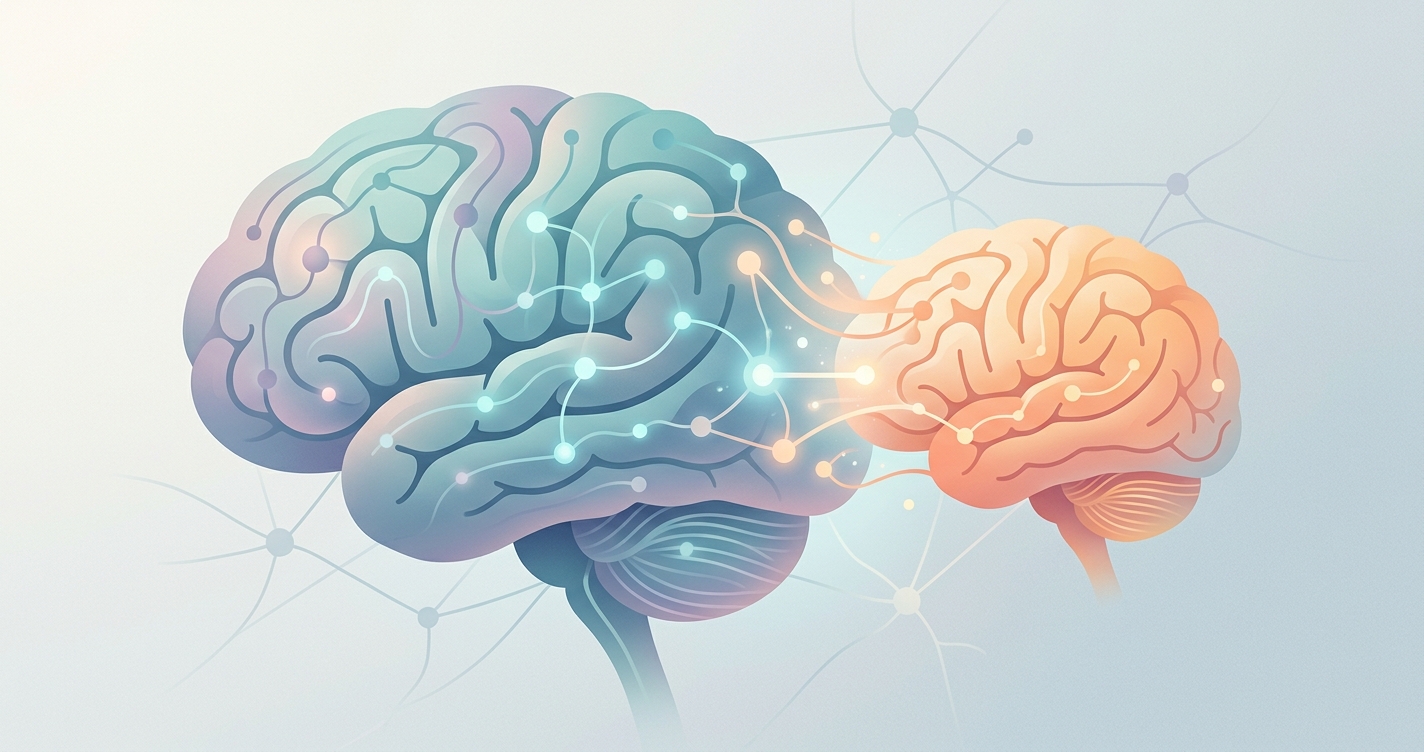
The performance of remote photoplethysmography (rPPG) models is highly dependent on the camera and sensor hardware used for data collection. A model trained on a specific high-resolution camera in a controlled lab setting may fail to produce accurate results when deployed on a different device, such as a low-power IoT camera or the infrared sensor in a car's driver monitoring system. This challenge is a major hurdle for hardware OEMs, automotive suppliers, and IoT device makers who want to integrate contactless vital signs monitoring into their products. The solution lies in adapting models to new sensors, and a key technique for achieving this is transfer learning for rPPG.
"The sensitivity of rPPG signal quality to camera sensor characteristics and image processing pipelines limits reproducibility and generalization across different hardware platforms." (Gideon, et al., 2021)
The Challenge of Sensor Variation in rPPG
The core problem is that every camera sees the world differently. Physical components like the color filter array, lens, and the sensor's spectral sensitivity vary significantly between models. Moreover, the built-in image signal processing (ISP) pipeline, which handles auto-exposure, white balance, noise reduction, and compression, introduces another layer of variability. These differences, often proprietary and inaccessible to the rPPG model developer, alter the subtle color and intensity changes that rPPG algorithms use to detect blood flow. As a result, a model trained on data from one camera may be biased towards its specific sensor and ISP characteristics, leading to a significant drop in accuracy when used with a different camera. This is where the concept of transfer learning rPPG adapting models sensors becomes critical for real-world applications.
| Strategy | Description | Pros | Cons |
|---|---|---|---|
| Full Retraining | Train a new model from scratch for every target sensor using a large, sensor-specific dataset. | Potentially highest accuracy for the target sensor. | Extremely high data collection and labeling costs; impractical for every new device. |
| Fine-Tuning (a form of Transfer Learning) | Take a pre-trained rPPG model and retrain only its final layers on a smaller, sensor-specific dataset. | Reduces data requirements compared to full retraining; uses knowledge from the original model. | May not be effective if the new sensor's characteristics are vastly different from the original. |
| Domain Adaptation | Use techniques to align the feature distributions of the source (original) and target (new) sensor data, making the model more robust to sensor differences. | Can work with unlabeled target data, reducing annotation costs. | Can be complex to implement; may not fully close the performance gap. |
| Source-Free Domain Adaptation (SFDA) | A more advanced form of domain adaptation where the model is adapted to the new sensor without access to the original source data, preserving data privacy. | High privacy; doesn't require access to potentially proprietary source datasets. | recent technique; may have fewer established best practices. |
Industry Applications of Transfer Learning for rPPG
The ability to adapt models to new sensors is not just an academic exercise. It is a fundamental requirement for deploying rPPG technology at scale across various industries.
Automotive driver monitoring
Automotive OEMs and Tier-1 suppliers are increasingly using infrared (IR) and near-infrared (NIR) cameras for driver monitoring systems (DMS). These sensors work in low-light conditions and are less intrusive than visible-light cameras. However, an rPPG model trained on standard RGB video will not work with IR data. Transfer learning allows developers to adapt these models to the unique spectral characteristics of IR sensors, enabling the DMS to monitor the driver's heart rate, a key indicator of drowsiness or distress.
Iot and smart home devices
IoT device makers aim to embed health monitoring into a wide range of products, from smart mirrors to security cameras. These devices often use low-cost, compact camera modules with varying specifications. It is not feasible to create a custom model for every device. Transfer learning provides a scalable way to deploy a reliable rPPG model across a diverse portfolio of hardware, adapting it to each specific camera with minimal additional data.
Smart glasses and wearables
Smart glasses present a unique challenge due to their small, often mobile, cameras and the close proximity to the user's face. The sensor data is subject to constant motion and changing light. By using transfer learning, developers can adapt a general rPPG model to the specific sensor and optical properties of the smart glasses, as well as the unique noise characteristics of a wearable use case.
Current research and evidence
The field of rPPG is actively researching methods for model adaptation. Researchers like Xin Liu and his colleagues at the University of Oulu have explored adversarial domain adaptation to learn domain-invariant features, making models more resilient to changes in lighting and camera types (Liu et al., 2020).
A significant advancement is the development of Source-Free Domain Adaptation (SFDA) for rPPG. A 2024 study introduced SFDA-rPPG, a framework that can adapt a model to a new camera sensor without needing the original training data. This is crucial for privacy and for situations where data-sharing agreements are restrictive. The study found that their method significantly improved the performance of rPPG models on new, unseen datasets.
Another approach, investigated by researchers at Michigan State University, is to use a Three-Branch Spatio-Temporal Consistency Network (TSTC-Net) combined with a Frequency-domain Wasserstein Distance (FWD) loss. This method helps maintain feature consistency and aligns the power spectrum of the signal across different domains, which is essential for accurate heart rate estimation.
The Future of Transfer Learning for rPPG
The future of transfer learning rPPG adapting models sensors is moving towards more automated and efficient adaptation techniques. We can expect to see the development of "universal" rPPG models that can be quickly adapted to new sensors with very little, or even zero, new data. This concept, known as zero-shot or few-shot learning, is the holy grail for scalable rPPG deployment. As camera technology continues to evolve, with new sensor types like event cameras and single-photon avalanche diodes (SPADs) becoming more common, transfer learning will be essential for unlocking their potential for health sensing.
Frequently asked questions
Q: Why can't I use a standard rPPG model with my new camera? A: Standard rPPG models are often trained on specific datasets and camera types. Differences in your camera's sensor, lens, and internal image processing can significantly alter the signal that the model relies on, leading to inaccurate readings. A model must be adapted to your specific hardware.
Q: What is the difference between fine-tuning and domain adaptation? A: Fine-tuning typically involves retraining the last few layers of a neural network on a small, labeled dataset from the new sensor. Domain adaptation is a broader set of techniques that aim to align the data distributions between the original (source) and new (target) sensor, and it can sometimes be done with unlabeled data from the target sensor.
Q: How much data do I need to adapt an rPPG model to my sensor? A: The amount of data needed depends on the adaptation technique and the difference between the source and target sensors. Transfer learning techniques like fine-tuning significantly reduce the data requirement compared to training a model from scratch. For some advanced domain adaptation methods, you may only need unlabeled video from your new sensor.
At Circadify, we specialize in addressing the challenges of deploying rPPG on novel hardware. Our expertise in custom model training and adaptation ensures that your device, whether it's an automotive sensor, an IoT camera, or a pair of smart glasses, can deliver reliable, accurate vital signs monitoring. To learn more about how we can create a model optimized for your specific camera and use case, inquire about a custom build at circadify.com/custom-builds.