
Smartwatch vs Camera Vitals: Which Reads Heart Rate Best?
Compares wrist sensors against contactless camera sensing on accuracy, comfort, and use cases for hardware OEMs and IoT makers building health tools.
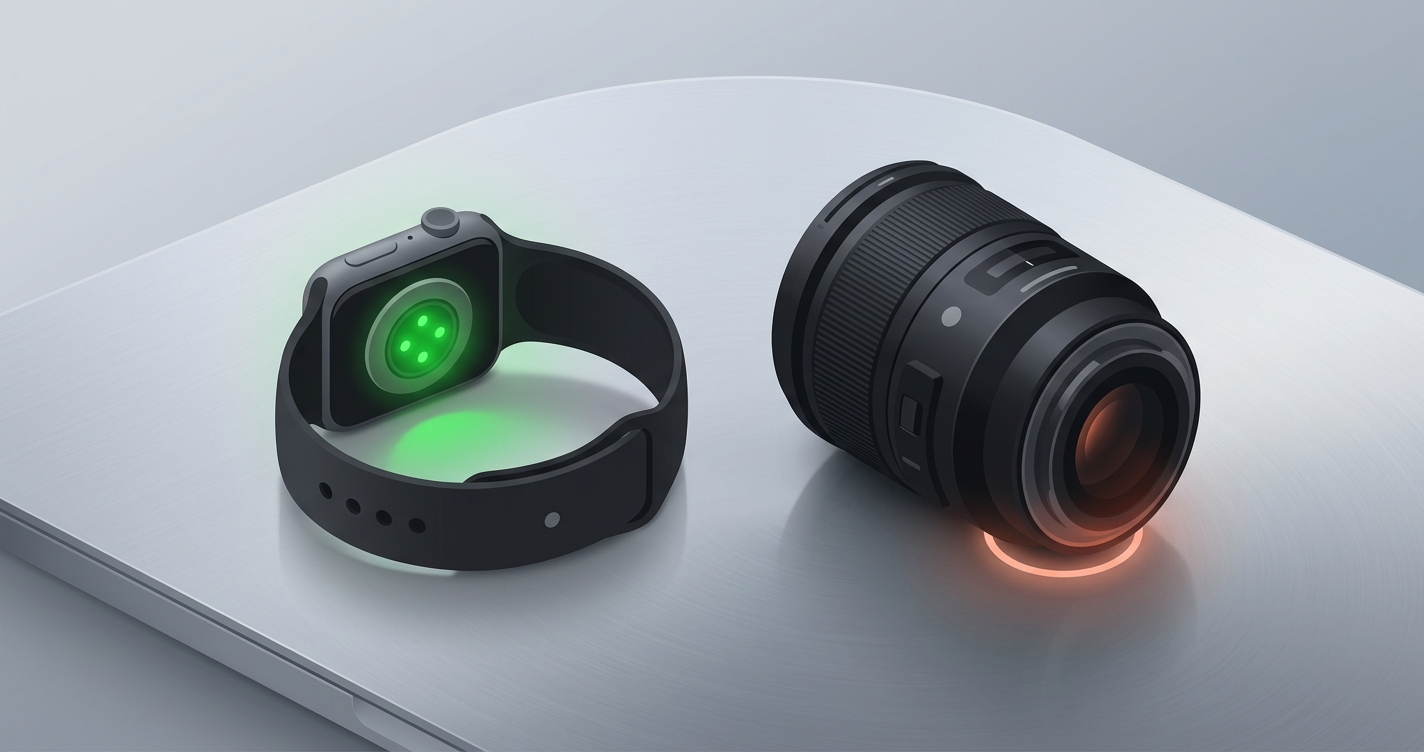
For hardware original equipment manufacturers (OEMs), automotive Tier-1 suppliers, and IoT device makers, the integration of physiological monitoring is a critical engineering challenge. Historically, the smartwatch has been the standard bearer for continuous heart rate tracking. But as computer vision hardware advances, engineering teams are increasingly evaluating a completely different methodology. The debate of smartwatch vs camera heart rate measurement is no longer a theoretical exercise. It is a core architectural decision that impacts the bill of materials, processing requirements, and end-user experience for automotive cabins, smart home devices, and clinical kiosks.
"Advanced remote photoplethysmography systems can now achieve a mean absolute error of less than 5 beats per minute for resting heart rate across diverse skin tones, matching the baseline accuracy of consumer wearables without requiring physical contact." (Google Research, Passive Heart Rate Monitoring Study, 2023)
The mechanics of optical vitals: smartwatch vs camera heart rate
The core physical principle enabling both smartwatch and camera-based vital signs monitoring is photoplethysmography (PPG). This non-invasive technique measures variations in blood volume within the microvascular bed of human tissue. As the human heart pumps blood throughout the circulatory system, the sheer volume of blood present in the outermost layers of the skin increases and decreases in rhythm with the cardiac cycle. Because hemoglobin in the blood absorbs light differently than surrounding tissues like muscle and fat, these microscopic volume changes translate into measurable variations in light reflection or transmission.
Smartwatches utilize contact-based PPG. A wearable device contains a dedicated sensor array on its underside, typically consisting of high-intensity green light-emitting diodes (LEDs) and sensitive photodiodes. The LEDs continuously illuminate the skin, and the photodiodes measure the exact intensity of the light that reflects back. Because the device is strapped tightly to the user's wrist, the optical path is incredibly short, tightly controlled, and largely shielded from ambient light interference. This hardware configuration guarantees a high signal-to-noise ratio under most standard conditions.
Camera-based systems utilize remote photoplethysmography (rPPG). Instead of relying on a dedicated, skin-contact optical sensor, these systems use standard computer vision hardware such as RGB lenses, infrared (IR) sensors, or thermal cameras to capture light reflecting off the user's exposed skin, usually focusing on the facial region. As the blood volume pulses, the skin undergoes micro-color changes. These color shifts are entirely invisible to the naked human eye but are easily detectable by modern camera sensors. A custom vital signs algorithm then extracts these minute pixel variations from consecutive video frames, using sophisticated mathematical filtering to remove environmental noise and isolate the raw cardiovascular pulse signal.
| Feature | Smartwatch (Contact PPG) | Camera Vitals (rPPG) |
|---|---|---|
| Measurement Method | Direct skin contact via LEDs and photodiodes | Contactless optical sensing via RGB, IR, or thermal cameras |
| Resting Accuracy | High (1-3 bpm variance) | High (2-5 bpm variance for top models) |
| Motion Tolerance | High (moves with the user's body) | Moderate (requires algorithmic compensation for head movement) |
| User Friction | High (requires charging, wearing, and fastening) | Zero (passive measurement during normal activity) |
| Ideal Environment | Continuous tracking, rigorous exercise | Stationary environments, driver cabins, desktop software |
| Integration Hardware | Dedicated wearable chassis, battery, optical sensor | Existing device cameras, edge processors |
Hardware and software tradeoffs for engineering teams
When evaluating smartwatch vs camera heart rate technologies, hardware integrators must weigh several competing constraints. Wearables require users to remember to charge and wear the device, creating a persistent point of friction. Camera systems remove this friction entirely by operating passively in the environment, but they introduce unique engineering challenges related to computer vision and lighting.
Consider the following technical tradeoffs:
- Sensor Placement Constraints: A smartwatch must be worn on the wrist, which a 2023 scoping review from Taipei Medical University identified as one of the least accurate anatomical locations for PPG sensing due to bone structure and excessive movement. Camera systems can target the forehead and cheeks, which offer stronger capillary beds and more reliable signal extraction.
- Processor Overhead: Wearables run simple, lightweight embedded algorithms directly on a microcontroller. Camera vitals require processing dense video feeds. Running an embedded health monitoring AI on the edge demands significant compute power, often necessitating a dedicated neural processing unit (NPU) or graphical processing unit (GPU) to maintain high frame rates without overheating the device.
- Ambient Lighting Dependency: Contact PPG provides its own dedicated light source, making it immune to room lighting changes. Traditional RGB camera rPPG requires adequate ambient light to function. However, an IR thermal vitals model can overcome this limitation by using near-infrared illumination to track physiological signals in complete darkness.
- Motion Artifacts: When a smartwatch user swings their arm, the sensor shifts on the skin, corrupting the optical signal. Wearable manufacturers use hardware accelerometers to filter this physical noise. Camera systems face a different motion problem. If the user moves their head abruptly, the facial tracking algorithm must re-acquire the region of interest. Advanced camera-specific vitals models use complex spatial-temporal networks to stabilize the signal during natural motion.
Key industry applications
Automotive in-cabin sensing
Automotive OEMs and Tier-1 suppliers are actively moving away from wearable dependencies for driver monitoring systems. Relying on a driver to wear a specific smartwatch to detect drowsiness or cardiovascular distress is not a scalable or reliable safety strategy. Instead, interior cameras mounted on the steering column or rearview mirror offer passive monitoring. By implementing a custom rPPG model trained on near-infrared video, vehicles can monitor heart rate variability and respiration rates in all lighting conditions to detect fatigue before it becomes dangerous.
Smart kiosks and telehealth terminals
Clinical kiosks in pharmacies and enterprise telehealth environments require low-friction user experiences. Expecting a patient to put on a specialized wearable device introduces hygiene concerns and mechanical failure points. A camera-specific vitals model integrated directly into the kiosk screen allows the system to measure heart rate, respiratory rate, and stress indicators simply by having the user look at the display during the intake process.
Ambient smart home and infant monitoring
The consumer IoT market is shifting toward invisible health monitoring. Baby monitors, for example, are rapidly transitioning from basic video streaming to sophisticated physiological sensing tools. An IoT health sensing model deployed on a crib camera can track an infant's breathing rate and pulse without attaching wires or wearable socks to the baby, significantly improving comfort and safety.
Current research and evidence
The empirical data comparing smartwatch vs camera heart rate accuracy reveals that both modalities excel in specific conditions while struggling in others.
In 2023, Google Research published findings on their Passive Heart Rate Monitoring system, demonstrating that a well-calibrated rPPG model can achieve a mean absolute error of less than 5 beats per minute for resting heart rate across diverse skin tones. The mean absolute percentage error was less than 10 percent when compared to a clinical-grade electrocardiogram (ECG). These metrics align closely with the accuracy benchmarks of premium consumer smartwatches in stationary settings.
Conversely, wearable PPG devices face significant accuracy challenges depending on sensor placement. A 2024 study published in JMIR Perioperative Medicine analyzed the accuracy of wrist-worn PPG devices and found that the wrist placement exhibited error rates up to 18.4 percent under certain conditions, compared to chest or forehead sensors which maintained median errors around 7 percent.
However, researchers universally agree that contact-based wearables maintain superior accuracy during rigorous physical activity. The continuous physical contact of a smartwatch allows the sensor to read through sweat and extreme body motion, whereas camera-based rPPG systems are best deployed in relatively stationary environments like cars, desks, or beds.
The future of contactless vitals
The future of physiological monitoring is ambient. As processing power increases and camera sensors become cheaper, the reliance on wearable hardware for basic vital signs will decrease. However, the software running these systems must evolve to meet the demands of edge hardware.
The biggest mistake IoT device makers make is attempting to deploy generic, off-the-shelf computer vision algorithms across diverse hardware platforms. A vitals algorithm trained on high-definition webcams will fail miserably when deployed on a low-resolution infrared sensor in a car cabin.
Achieving high reliability requires custom rPPG model training. This process involves capturing diverse human data using the exact camera, lens, and lighting environment of the target device. Only by building a camera-specific vitals model can engineering teams guarantee high performance across all skin tones and user scenarios.
Frequently asked questions
What is the main difference in accuracy between smartwatch vs camera heart rate sensing?
Smartwatches are generally more accurate during intense physical activity because the sensor maintains constant skin contact. Camera-based sensing offers comparable accuracy for resting heart rate and is completely non-invasive, making it better suited for long-term monitoring in stationary settings like driving or working at a desk.
Can camera-based vitals work in total darkness?
Yes, provided the hardware uses the correct sensor. While standard RGB cameras require visible light, systems equipped with infrared (IR) cameras can measure vital signs in complete darkness. This requires an IR thermal vitals model specifically trained on near-infrared video data.
Does remote photoplethysmography require cloud processing?
No. Modern edge computing capabilities allow sophisticated computer vision algorithms to run locally on the device. An embedded health monitoring AI can process video frames in real-time without sending sensitive image data to the cloud, ensuring user privacy and low-latency results.
What makes custom vital signs algorithms better than generic software?
Generic software is generalized for average conditions. A custom vital signs algorithm is trained specifically on the exact camera sensor, lens distortion profile, and environmental lighting of your specific hardware product. This customization significantly reduces error rates and improves performance across diverse demographics.
Hardware OEMs and IoT device makers evaluating contactless health features must recognize that generic algorithms often fail when ported to unique hardware setups. Achieving high-performance camera sensing requires custom rPPG model training tailored to your exact lens, sensor, and ambient lighting conditions. The tryvitalsapp.com Research Team at Circadify specializes in building and optimizing these models for enterprise hardware architectures. If your engineering team is deciding how to implement optical health monitoring, contact us to discuss your specific requirements at circadify.com/custom-builds.