
How to Train an rPPG Model for Automotive Cabin Cameras in 2026
A research-style report for automotive OEMs on the key factors and methodologies for training custom rPPG models for in-cabin driver monitoring systems, addressing challenges like variable lighting and motion artifacts for Euro NCAP 2026.
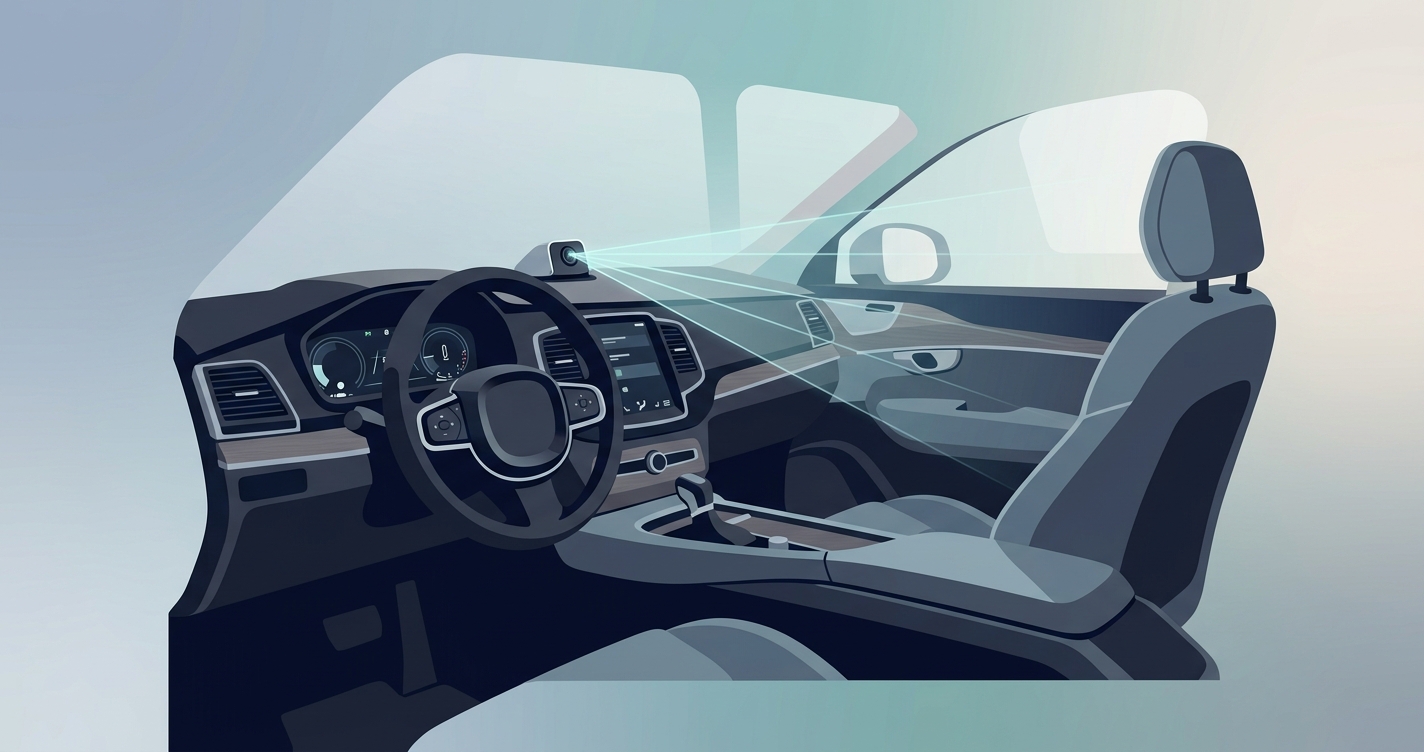
The integration of robust driver monitoring systems (DMS) is no longer an optional feature for automotive OEMs; it is a critical path for achieving top safety ratings and meeting regulatory milestones. With Euro NCAP's 2026 protocols mandating direct driver monitoring for signs of drowsiness and distraction to secure a 5-star rating, the engineering focus has intensified on the technologies that enable this capability. Remote photoplethysmography (rPPG), a camera-based technique for measuring vital signs like heart rate and respiration rate, stands out as a key enabler. However, the performance of these systems is entirely dependent on the underlying AI. Effective rppg model automotive cabin camera training is the determining factor between a system that passes certification and one that fails in real-world conditions.
"A study analyzing real-world driving data found that driver drowsiness was a factor in up to 21% of all fatal crashes, highlighting the urgent need for reliable in-cabin monitoring systems." - European Commission, "Road safety in the European Union" (2023).
The core challenges of rPPG model automotive cabin camera training
Training an rPPG model for the automotive cabin is fundamentally a problem of signal extraction in a high-noise environment. Unlike controlled clinical settings, a vehicle interior presents a constant stream of challenges that can corrupt the subtle photoplethysmographic signal extracted from the driver's skin. A successful training methodology must be built around acquiring data that accounts for these specific and difficult conditions.
The primary obstacles include:
- Variable Illumination: The model must perform reliably during the day, at night with interior NIR illumination, passing through tunnels, under dappled light from trees, and in the face of sudden headlight glare from oncoming traffic. Each scenario drastically alters the light received by the camera sensor.
- Motion Artifacts: Driver head movements, steering, checking mirrors, and even talking introduce significant motion noise that can easily overwhelm the cardiac signal. Research by Hassan et al. (2021) at the University of Waterloo has focused on adaptive filtering techniques to isolate the rPPG signal from these motion-induced artifacts.
- Diverse Driver Physiology: The model must be robust across a wide range of skin tones, ages, and physiological states. The reflective properties of skin vary significantly, and the training data must reflect this diversity to ensure equitable performance.
- Camera Placement and Sensor Type: Each vehicle model has a unique cabin geometry, leading to different camera mounting positions (e.g., steering column, rearview mirror, A-pillar). Furthermore, the choice of sensor, be it RGB, NIR, or a combination, defines the characteristics of the input data. An rPPG model is not one-size-fits-all; it must be trained or fine-tuned for the specific camera and placement in the target vehicle.
Data acquisition strategies comparison
The foundation of any successful rppg model automotive cabin camera training program is the dataset. The quality, diversity, and realism of the training data directly translate to model performance. OEMs and Tier-1 suppliers must choose a data strategy that balances cost, speed, and real-world applicability.
| Strategy | Advantages | Disadvantages | Best For |
|---|---|---|---|
| Public Datasets | Low cost, readily available, provides a baseline for research. Examples: PhysDrive, MMDrive. | May lack diversity, may not match target camera sensor, often limited to specific driving scenarios. | Initial research, benchmarking public algorithms. |
| Simulated Data | Can generate vast amounts of perfectly-labeled data covering edge cases (e.g., specific lighting events). | May not fully capture real-world optical properties and subtle human behaviors, leading to a "sim-to-real" gap. | Augmenting real data, training for rare but critical events. |
| In-Vehicle Data Collection | Highest realism, captures the exact noise profile of the target vehicle, sensor, and driving conditions. | Expensive, time-consuming, requires complex logistics for data-logging and ground-truth sensor synchronization. | Production-grade model training and validation. |
Industry applications of trained rPPG models
Once a model is properly trained, it becomes the core of various in-cabin safety and wellness features that are increasingly demanded by regulations and consumers.
Driver drowsiness and fatigue detection
As mandated by Euro NCAP, detecting drowsiness is a primary application. A trained rPPG model provides continuous heart rate and heart rate variability (HRV) data. A decrease in HRV and a steady, low heart rate are strong physiological indicators of fatigue. By feeding this data into a higher-level classifier, the DMS can issue timely alerts.
Distraction and cognitive load monitoring
Sudden spikes in heart rate can indicate a stress response or a sudden increase in cognitive load. By correlating rPPG data with head pose and gaze information, the system can differentiate between normal driving tasks and moments of high stress or distraction, such as a near-miss incident or intense conversation.
Occupant wellness and comfort
Beyond safety, rPPG enables wellness features. The system can monitor passenger vital signs to adjust climate control for optimal comfort or suggest a break on long journeys. This transforms the vehicle from a simple mode of transport into a proactive wellness environment.
Current research and evidence
The academic and industrial research communities are actively working to solve the core challenges of in-cabin rPPG. A 2023 systematic review of AI innovations in driver monitoring highlighted the shift from traditional signal processing to deep learning-based methods. Models like DeepPhys and a variety of CNN- and Transformer-based architectures are now standard for extracting the rPPG signal from raw video frames.
A key area of research is domain adaptation. A study by researchers at the University of Oulu, Finland, demonstrated methods to adapt a model trained on a public dataset to a new, unseen dataset with different camera properties, using transfer learning techniques. This is vital for OEMs, as it can reduce the amount of per-model data collection required. The availability of public datasets like PhysDrive, which includes synchronized RGB and NIR video with ground-truth ECG, has been instrumental in allowing researchers to benchmark these new algorithms in an automotive context.
The future of in-cabin sensing
Looking toward 2026 and beyond, the future lies in sensor fusion. While rPPG provides a rich stream of physiological data, its power is magnified when combined with other in-cabin sensors. Future systems will fuse rPPG data with information from:
- In-cabin radar: For detecting subtle breathing movements and enabling child-presence detection.
- Eye-tracking cameras: To get a definitive measure of gaze and micro-sleeps.
- Audio sensors: To analyze speech patterns for signs of intoxication or extreme fatigue.
This multi-modal approach will create a comprehensive digital twin of the driver's state, enabling more accurate, predictive, and nuanced safety and comfort interventions. The rPPG model will serve as the physiological foundation for this next generation of intelligent vehicles.
Frequently asked questions
What is the primary driver for implementing rPPG in automotive cabins? The main driver is regulatory pressure, specifically the Euro NCAP 2026 roadmap, which requires advanced direct driver monitoring for drowsiness and distraction to achieve a 5-star safety rating. This has made robust DMS a mandatory feature for top-tier automotive OEMs.
Can a single rPPG model work for all vehicles? No, a one-size-fits-all model is not effective. The performance of an rPPG model is tightly coupled to the specific camera sensor, its lens, its position in the cabin, and the NIR illumination source. Each vehicle model requires a custom-trained or at least a fine-tuned model to ensure accuracy.
What is the biggest technical challenge in training an automotive rPPG model? The most significant challenge is overcoming signal noise caused by motion artifacts (driver head movement, vehicle vibration) and rapid, extreme changes in lighting conditions. A successful training dataset must include a massive volume of data that captures these real-world scenarios.
The process of rppg model automotive cabin camera training is a complex, data-intensive engineering challenge that sits at the heart of next-generation vehicle safety. As OEMs and Tier-1 suppliers navigate the stringent requirements of upcoming regulations, partnering with specialists in camera-specific AI model development is becoming essential. Circadify is at the forefront of addressing this space, providing expertise in creating custom-trained rPPG models optimized for unique automotive hardware and environmental conditions. To learn more about commissioning a custom build for your specific platform, begin the process at our custom build inquiry page at circadify.com/custom-builds.