
How to Keep Camera Vitals Accurate When People Move
Discover why movement breaks contactless health tracking and how a custom motion-resistant vitals model maintains camera vitals accuracy in dynamic environments.
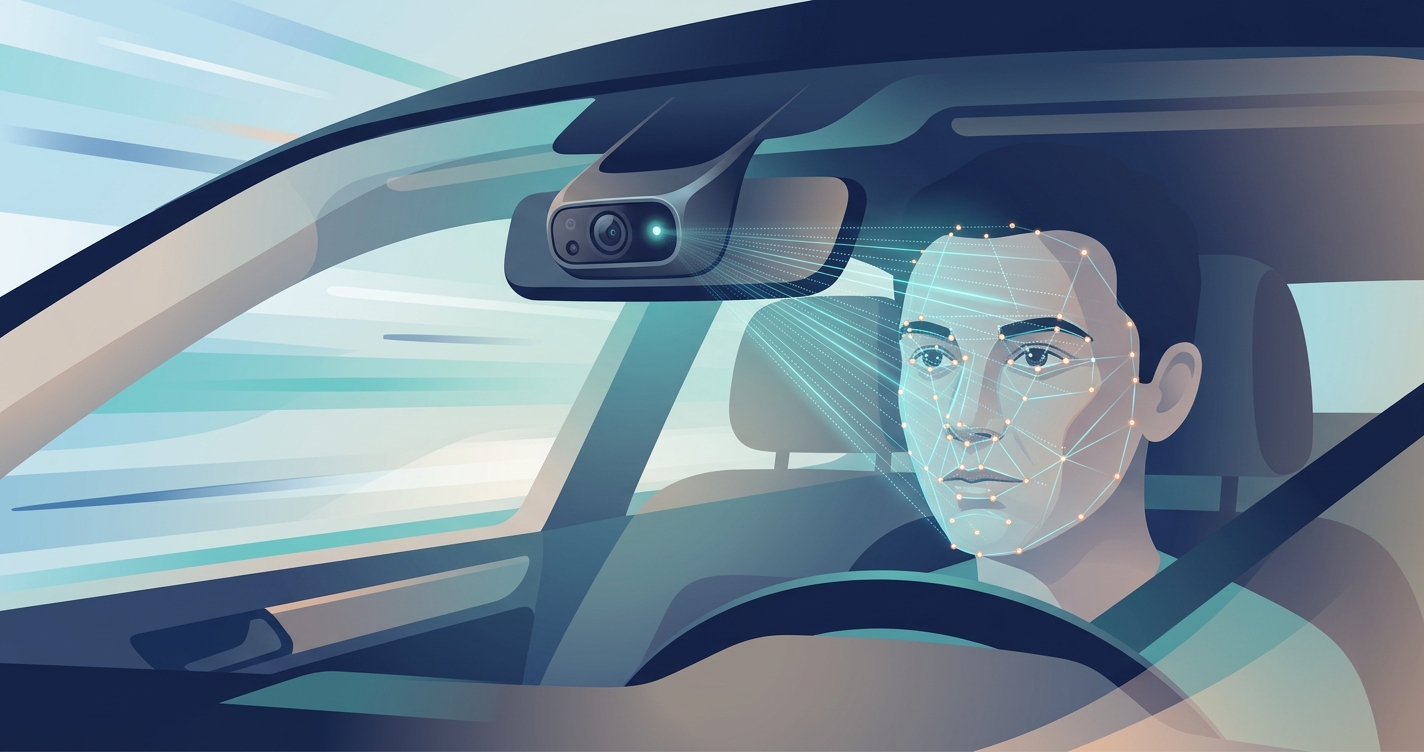
For hardware original equipment manufacturers (OEMs) and automotive Tier-1 suppliers, integrating contactless health monitoring often begins with a highly controlled laboratory demonstration. A subject sits perfectly still under uniform studio lighting, and a generic remote photoplethysmography (rPPG) model extracts a pristine heart rate signal from the video feed. The demonstration looks flawless. However, the engineering reality shifts dramatically upon deployment in a moving vehicle, a busy living room, or an industrial workplace. The critical challenge in commercializing these systems is maintaining camera vitals accuracy with motion.
When a subject is perfectly still, the camera can easily measure the microscopic variations in skin color caused by the cardiac cycle. But even natural micro-expressions, conversational speaking, normal breathing, and vehicular vibration introduce severe optical noise. This noise obscures the micrometers-deep skin perfusion changes required for physiological measurement. Without specialized training, custom hardware calibrations, and dedicated compensation pipelines, standard algorithms rapidly fail in the wild. Ensuring accuracy is not just a software patch; it requires a fundamental rethinking of how the camera processes the physical world.
"In controlled indoor environments, remote photoplethysmography algorithms routinely achieve a Root Mean Square Error near 1.0, but this error rate can spike beyond 9.07 in driving environments due to dynamic motion artifacts and illumination fluctuations.", Evaluation of Video-Based rPPG in Challenging Environments, 2023
The physics of motion artifacts: why camera vitals accuracy with motion fails
Maintaining camera vitals accuracy with motion requires understanding exactly how movement corrupts the extraction of blood volume pulse signals. Remote photoplethysmography operates by tracking minute variations in skin color. As the heart pumps blood, the concentration of hemoglobin changes the optical absorption properties of the facial skin. The camera sensor captures these changes as fluctuations in pixel intensity, usually isolating the green channel in visible light applications, as hemoglobin highly absorbs green light.
When a subject moves, whether through a driver checking a side mirror, a patient shifting in a hospital bed, or the micro-vibrations of a vehicle chassis, the geometry between the light source, the subject's face, and the camera sensor changes instantly. This geometric shift causes what optical engineers call specular reflections. Specular reflections are mirror-like reflections of light from the skin surface, which contain zero physiological information. As the face moves, these bright spots and their corresponding shadows travel across the region of interest.
For generic rPPG software, these high-amplitude motion artifacts easily drown out the low-amplitude physiological signals. Standard software attempts to fix this by using simple spatial averaging or basic temporal filtering. However, these rudimentary approaches fail because the frequency of the physical motion often overlaps with the human physiological frequency band, which is roughly 0.7 Hz to 4.0 Hz, corresponding to 42 to 240 beats per minute. When a custom vital signs algorithm is not deployed, the system cannot distinguish between an actual pulse wave and a periodic physical movement, leading to wildly inaccurate heart rate outputs and false alerts.
Motion artifacts are broadly categorized into rigid and non-rigid motion. Rigid motion occurs when the entire head moves uniformly in the frame, such as panning, tilting, or translating. While disruptive, rigid motion can often be tracked. Non-rigid motion is far more complex. This includes facial expressions, talking, chewing, or blinking. Non-rigid motion changes the topological structure of the face, causing localized pixel distortions that cannot be fixed by simply moving a bounding box. A robust pipeline must identify and ignore these localized distortions while continuing to extract pulse data from the stable regions of the face, such as the forehead or upper cheeks.
| Feature | Generic Off-the-Shelf rPPG | Custom Motion-Resistant Vitals Model |
|---|---|---|
| Motion Handling | Fails under head rotation and vibration | Actively compensates using adaptive filtering |
| Model Training | Trained on static, forward-facing datasets | Camera-specific training in dynamic environments |
| Illumination | Requires stable, diffuse visible light | Robust across shifting shadows and IR sensors |
| Error Rate (Real-World) | High (MAE > 7.0 bpm in driving scenarios) | Low (Maintains strict MAE thresholds) |
| Hardware Fit | Sensor agnostic (low optimization) | Embedded directly to the target ISP and lens |
Building a motion-resistant vitals model requires multi-layered architectural interventions at both the signal processing and neural network levels. Hardware engineering teams cannot rely on a single filter; they must implement a sequential pipeline. Key engineering requirements include:
- Continuous Facial Landmark Tracking: The system must utilize dense mesh tracking to perform continuous recalibration of the facial bounding box. This maintains strict spatial alignment across video frames, even during high degrees of yaw and pitch.
- Adaptive Filtering Algorithms: Utilizing advanced mathematical techniques like Independent Component Analysis (ICA) or adaptive spectral filter banks to separate the biological signal from the structural noise based on statistical independence.
- Dynamic Illumination Normalization: Actively adjusting pixel values to account for shadows mapping across the face. As the subject changes position relative to the light source, the normalization layer equalizes the contrast to prevent artificial signal peaks.
- Temporal Difference Processing: Processing the phase shift and color differences between consecutive frames rather than relying on absolute pixel intensity. This ensures the blood volume pulse is tracked independently of the spatial movement.
- Quality Assessment Modules: Implementing a secondary neural network whose sole job is to grade the quality of the incoming frames. If a driver sneezes, the system instantly identifies the extreme non-rigid motion and drops those specific frames from the calculation window rather than letting them corrupt the entire pulse estimation.
Industry applications for robust tracking
In-cabin health sensing
Automotive Tier-1 suppliers face the most hostile environment for optical health tracking. Driver monitoring vitals must be extracted while the vehicle traverses uneven terrain, passes under alternating streetlights, and accelerates rapidly. A custom vital signs algorithm deployed on an in-cabin camera must account for low-frequency body sway caused by steering, as well as high-frequency mechanical vibrations transferred through the vehicle chassis. A camera-specific model trained directly on the exact optics, focal length, and mounting angle of the steering column or rearview mirror is the only reliable way to filter this complex mechanical noise.
Regulatory frameworks are beginning to mandate advanced driver monitoring. Under protocols established by Euro NCAP, detecting a driver's cognitive state is becoming a safety requirement. However, measuring cognitive load or sudden medical distress requires a pristine heart rate variability (HRV) signal. HRV is calculated by measuring the exact millisecond differences between successive heartbeats. When motion artifacts introduce even minor timing errors into the peak detection phase, the HRV calculation becomes entirely invalid. Therefore, an automotive OEM cannot simply accept a higher error margin; the core utility of the safety feature depends on absolute precision during movement.
Smart glass manufacturing
Smart glasses and augmented reality headsets sit directly on the user's face, meaning the camera sensor moves in perfect sync with the user's head. However, the background environment is constantly shifting, and the device itself experiences micro-slips on the bridge of the nose as the user walks. Compensating for motion in this context requires separating the sensor's ego-motion from the subject's actual physiological changes. This is a highly intensive computational task that relies heavily on localized skin segmentation and lightweight neural networks optimized for the severe battery and thermal constraints of wearable chipsets.
Clinical telehealth and iot kiosks
Even in relatively static environments like a clinical telehealth kiosk or a smart home mirror, users naturally drift. They lean in to read text, adjust their posture, speak to a virtual assistant, and shift their weight. A motion-resistant vitals model ensures that the measurement stream is not interrupted every time a patient blinks heavily or changes their viewing angle.
In a clinical setting, false alarms caused by motion artifacts are a primary driver of alarm fatigue among healthcare professionals. If a patient adjusting their posture triggers a tachycardia alert, the system loses its credibility. Custom vital signs algorithms designed for clinical kiosks use advanced temporal filtering to hold the previous reliable measurement state during a period of high motion, resuming active calculation only when the signal-to-noise ratio normalizes. This ensures the output reflects true physiology rather than physical restlessness.
Current research and evidence
The engineering transition from static to dynamic environments is heavily documented in recent computer vision and biomedical literature. A primary focus of modern research is separating the structural variation caused by movement from the true physiological variation caused by capillary blood flow.
In 2023, researchers at Sangmyung University, including Kunyoung Lee, Hyunsoo Seo, and Eui Chul Lee, explored advanced quality-based compensation techniques for camera-based driver monitoring. Their work utilized Temporal Difference Transformers to infer rPPG signals while simultaneously assessing their quality. By predicting the signal-to-noise ratio in real-time, their proposed system can dynamically assign lower confidence weights to frames corrupted by sudden movements, effectively isolating the clean physiological data.
Further validation of the difficulty of vehicular environments was demonstrated in studies measuring Mean Absolute Error (MAE), the standard metric for assessing rPPG accuracy. Research tracking real-world drivers found that while a stationary passenger's MAE remained relatively low at 3.43 beats per minute (bpm), the active driver's MAE jumped to 7.85 bpm in compact cars due to the necessity of active driving motions like steering and mirror-checking.
To combat this error inflation, researchers at the Korea Advanced Institute of Science and Technology (KAIST), including Pangi Park, Woobean Lee, and SeongHwan Cho (2023), introduced adaptive filter-based motion artifact cancellation techniques. By utilizing multi-wavelength photoplethysmography and adaptive spectral filter banks, their methodologies successfully balanced the robustness required for physical movement with the sensitivity needed for accurate in-cabin health sensing.
The future of motion-resistant vitals
The next generation of embedded health monitoring will shift entirely away from generic video processing pipelines toward hardware-aware neural architectures. As original equipment manufacturers integrate near-infrared (NIR) and thermal sensors to bypass the limitations of visible light in dark environments, the motion compensation algorithms must be retrained for entirely different spectral physics.
Future systems will likely rely heavily on self-supervised pre-training, such as Masked Autoencoders (MAE). These networks can learn periodic physiological patterns directly from thousands of hours of unannotated driving footage or living room data. By mathematically understanding the natural frequency of human motion versus human biology, these networks will filter out artifacts before the signal processing stage even begins. The result will be continuous, highly accurate driver monitoring vitals that remain locked on, regardless of the road conditions or the ambient lighting.
Frequently asked questions
Why does subject movement break standard camera vitals? Movement instantly changes the lighting geometry on the skin, altering pixel intensity in the camera's region of interest. Generic algorithms cannot distinguish between the pixel changes caused by a shifting physical shadow and those caused by the microscopic skin color variations of a heartbeat, leading to corrupted data.
What is a motion-resistant vitals model? It is a custom machine learning architecture trained to isolate physiological signals from physical movement. It uses advanced spatial tracking, adaptive filtering, and temporal difference neural networks to maintain accuracy even when a subject is rotating their head or experiencing vehicular vibration.
How is motion compensated for in automotive environments? Automotive applications use camera-specific training that accounts for the unique vibration profile of a vehicle chassis and the specific mounting angle of the driver monitoring camera. This often involves multi-spectral imaging and quality-assessment neural networks that dynamically drop corrupted video frames.
Can deep learning fix motion artifacts entirely? While deep learning significantly reduces the error rate in driving scenarios, it is not magic. It must be paired with precise camera calibration, optimized illumination, and a clean optical path to ensure continuous reliability in production hardware. Software alone cannot fix a fundamentally flawed hardware setup.
Automotive Tier-1 suppliers and hardware OEMs cannot rely on generic, off-the-shelf software to handle the immense optical noise of a dynamic environment. Building a robust physiological tracking pipeline requires training the architecture on your exact hardware stack to ensure the algorithm understands your specific sensor's response to movement. Circadify specializes in developing embedded AI for challenging conditions, offering custom rPPG models optimized for your specific camera, sensor, and use case. To begin engineering a motion-resistant vitals model tailored to your precise hardware requirements, submit a custom build inquiry today.