
How to Evaluate Camera Hardware for rPPG Applications
A guide for hardware OEMs on selecting and evaluating camera hardware for rppg applications. Learn the key parameters for your specific use case.
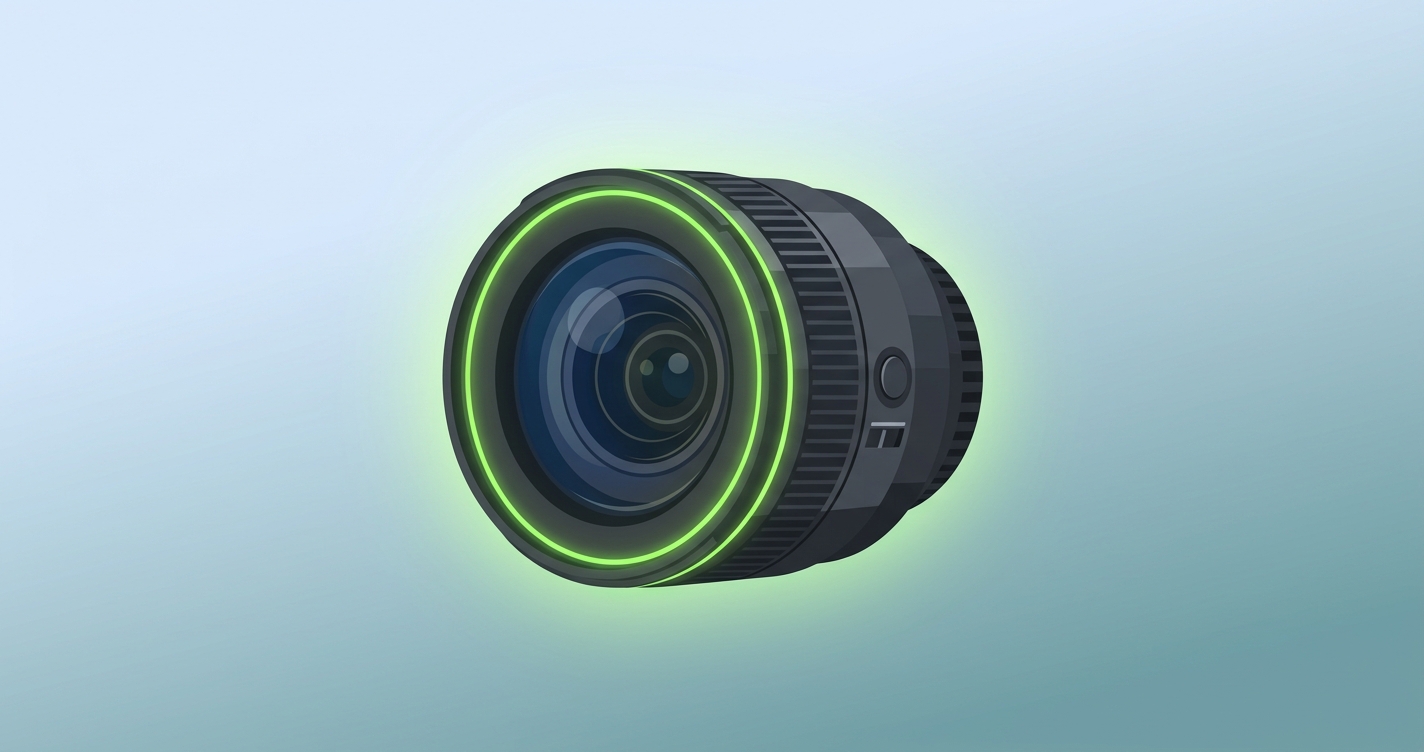
For hardware OEMs, automotive Tier-1 suppliers, and IoT device makers, the promise of contactless vital signs monitoring through remote photoplethysmography (rPPG) is immense. It unlocks new capabilities in driver monitoring, passive health tracking, and smart devices. However, the performance of any rPPG algorithm is fundamentally tethered to the quality of the signal it receives. This makes the selection and configuration of camera hardware a critical, yet often overlooked, aspect of system design. To successfully evaluate camera hardware for rPPG applications, engineering teams must move beyond generic specifications and focus on the nuanced parameters that directly impact the subtle, pulsatile signal they need to detect.
"The green color channel is particularly important for rPPG, as hemoglobin strongly absorbs green light, making it the strongest source of the photoplethysmography signal."
Evaluating camera hardware for rPPG applications: a deep dive
The core task of an rPPG system is to detect minute, periodic changes in skin color caused by the blood volume pulse. These changes are invisible to the naked eye, so the camera must be sensitive enough to capture them reliably. When teams evaluate camera hardware for rPPG applications, they must consider a specific set of performance characteristics that are often not prioritized for standard imaging. Factors like frame rate, sensor sensitivity, and control over image processing pipelines become critical. Research by Unakafov (2018) highlights that while many cameras can technically be used for rPPG, optimized hardware provides a significantly more robust signal, especially in challenging, real-world conditions like low light or when the subject is in motion.
| Feature | Low-End Webcam | Scientific/Industrial Camera | Significance for rPPG |
|---|---|---|---|
| Sensor Type | CMOS | CMOS or CCD | High-quality CMOS is common; CCD can offer superior light sensitivity but is often more expensive. |
| Frame Rate | Variable (often <30 fps) | High, stable (60-120 fps+) | Higher frame rates provide more data points, improving temporal resolution of the pulse wave. |
| Resolution | 720p - 1080p | 1080p - 4K+ | Less critical than other factors; high resolution does not guarantee good rPPG performance. |
| Manual Controls | Limited or None | Full (Exposure, Gain, White Balance) | Essential. Disabling auto-adjustments prevents the camera from "correcting" the very signal being measured. |
| Color Channels | 8-bit RGB | 10/12-bit RGB, NIR options | Higher bit depth captures more subtle color variations, improving SNR. NIR is crucial for low-light. |
| Compression | High (H.264/MJPEG) | Uncompressed/Lossless (RAW) | Uncompressed video is ideal. Compression algorithms can destroy the micro-texture details needed for rPPG. |
Industry Applications
The choice of camera hardware is directly influenced by the specific application. The requirements for an automotive driver monitoring system, which must work in highly variable lighting and with a non-stationary subject, are different from those for a clinical kiosk in a controlled environment.
Automotive driver monitoring
In the automotive sector, cameras are often a mix of visible light (RGB) and Near-Infrared (NIR) sensors. NIR cameras are particularly effective for driver monitoring as they are robust to day/night lighting changes and can see through many types of sunglasses. When evaluating camera hardware for rPPG applications in this context, OEMs must consider:
- NIR Sensitivity: The quantum efficiency of the sensor in the 850nm-940nm range.
- Global Shutter: To minimize motion blur from vehicle vibrations and driver movement.
- Compact Form Factor: For seamless integration into the cockpit, dashboard, or rear-view mirror.
Iot and smart home devices
For IoT device makers, the priorities shift towards cost, power consumption, and form factor. The camera in a smart display or home wellness device needs to be effective but also economical. Key considerations include:
- Power Efficiency: The camera module's power draw, especially for battery-powered devices.
- ISP Integration: On-chip image signal processing that can be customized or bypassed.
- Lens and Field of View (FOV): A wider FOV might be necessary to capture subjects who are not perfectly centered.
Sensor fusion for robustness
For applications like automotive driver monitoring or hospital patient observation, relying solely on a single camera for rPPG can be risky. Environmental conditions can change, or the subject might move, leading to signal degradation. This is where sensor fusion comes in. By combining the video stream with data from other sensors, such as an IR thermal camera to get a more stable reading in low light, or an accelerometer to detect and compensate for motion artifacts, hardware OEMs can build significantly more robust and reliable vital signs monitoring systems. The custom models can be trained to intelligently weigh the data from different sensors based on the current context, ensuring a continuous and accurate reading.
Current research and evidence
Recent academic work provides a clear evidence base for hardware selection. A 2022 study by Wang and colleagues at the University of South Australia demonstrated that while frame rates above 30 fps offer diminishing returns for basic heart rate, they can be beneficial for capturing more complex physiological metrics like heart rate variability (HRV). Their research confirmed that control over exposure and gain settings was the most critical factor in achieving a high signal-to-noise ratio (SNR).
A significant body of research focuses on overcoming the main challenges to rPPG accuracy: motion artifacts and variable lighting conditions. Researchers like de Haan and van Leest (2014) have pioneered methods using chrominance-based signals (CHROM) which are less sensitive to motion. More recent approaches utilize deep learning models, such as convolutional neural networks (CNNs), to automatically learn and filter out noise from the raw video signal. A 2021 study by Niu et al. demonstrated a robust deep learning model that could maintain high accuracy even with significant head motion.
Furthermore, the choice of the image sensor itself, CMOS vs. CCD, and its specific characteristics play a crucial role. The quantum efficiency of the sensor, particularly in the green portion of the spectrum (around 520-560 nm) where blood absorbs the most light, directly impacts the signal-to-noise ratio (SNR) of the raw PPG signal. Disabling automatic adjustments like auto-exposure and auto-white balance is a critical step, as confirmed by numerous studies, to prevent the camera from inadvertently filtering out the subtle color changes that form the basis of the rPPG signal. The impact of video compression is also a major factor. A study by Li, Chen, and Zhao (2018) showed that high compression rates, such as those used in H.264 and H.265 codecs for efficient video transmission, can severely degrade the rPPG signal by smoothing over the very micro-level changes the algorithms need to detect.
The Future of Camera Hardware for rPPG
The trend is toward more intelligent sensors. Event cameras, which only report pixels that have changed in brightness, offer a novel and potentially highly efficient way to capture the pulsatile signal with very low power and data rates. Likewise, advancements in hyperspectral imaging, while currently expensive, could one day allow rPPG systems to analyze skin reflectance across dozens of narrow-band wavelengths, dramatically improving accuracy and enabling the detection of new biomarkers. For now, the most practical approach for OEMs is to use high-quality, controllable industrial or automotive-grade cameras and pair them with rPPG models trained specifically for that hardware.
Frequently asked questions
Q: What is the most important camera setting to get right for rPPG?
A: Disabling all automatic adjustments. Auto-exposure, auto-white balance, and auto-focus must be turned off and set to fixed values. The goal is to capture the raw, unfiltered changes in skin color, and automatic camera "improvements" will interfere with this.
Q: Is a 4K camera better than a 1080p camera for rPPG?
A: Not necessarily. Higher resolution does not equal a better rPPG signal. In fact, most rPPG algorithms down-sample the image significantly. A high-quality 1080p camera with good manual controls and low compression will almost always outperform a 4K webcam with aggressive, locked-in processing.
Q: Can I use a standard off-the-shelf webcam?
A: You can, but the results will likely be poor, especially in non-ideal conditions. Consumer webcams are designed for video conferencing, not scientific measurement. They have aggressive, automatic image processing that cannot be disabled. For any production system, a camera that allows for manual control and access to raw or uncompressed video is essential.
The process to evaluate camera hardware for rPPG applications is a methodical one, balancing the ideal scientific requirements with the practical constraints of cost, power, and form factor. As the demand for passive health sensing grows, the tight integration between camera hardware and the software that interprets its data has become the key to success. Circadify specializes in addressing this challenge, providing custom rPPG model training that is optimized for your specific camera hardware and use case. If you are a hardware OEM looking to integrate vital signs monitoring, inquire about a custom build at circadify.com/custom-builds.