
Custom rPPG Model Training Costs vs Timeline Tradeoffs
Map how budget, data volume, and deadline pressure trade off when commissioning a custom camera vitals model for embedded health monitoring AI.
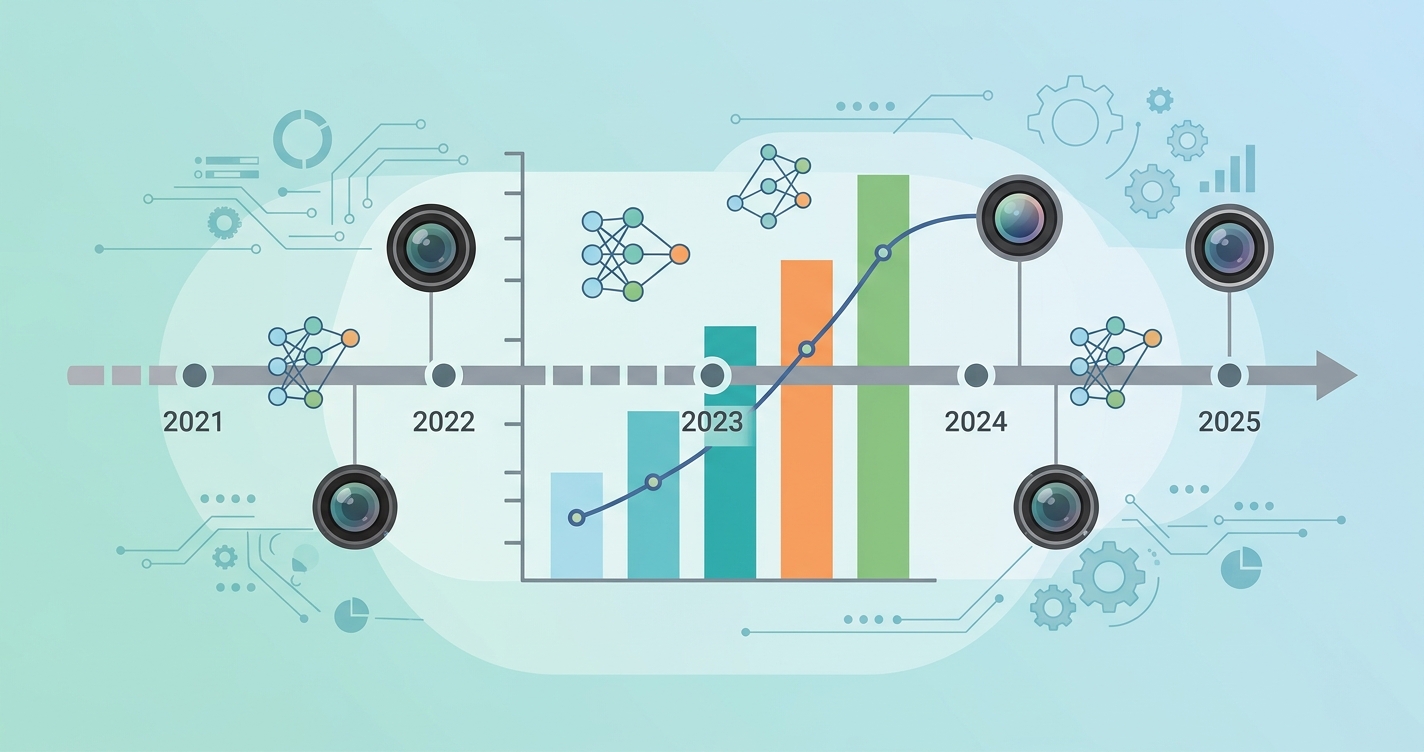
For hardware original equipment manufacturers (OEMs) and automotive Tier-1 suppliers integrating remote photoplethysmography (rPPG) into new devices, the choice between off-the-shelf algorithms and custom builds is fundamentally an engineering trade-off. Off-the-shelf software rarely accounts for unique sensor characteristics, specific infrared wavelengths, or the optical constraints of a custom lens assembly. A generic model trained on standard webcams will struggle to process the raw output of a specialized automotive thermal sensor or a highly compressed smart glass video feed. Consequently, engineering teams often decide to commission a custom build.
However, this immediately introduces a complex calculus involving budget, data volume, and deadline pressure. When evaluating custom vitals model training time and cost, procurement teams must understand that these variables are tightly coupled. Rushing a timeline requires scaling up compute resources and accepting smaller datasets, while aiming for high accuracy across diverse demographics requires extensive data collection that drives up both the financial budget and the delivery timeline. The decision-making process must move beyond simple software licensing fees and account for the total cost of ownership involved in generating entirely new physiological datasets.
"Data collection and annotation routinely account for 50% to 80% of the total cost in computer vision projects. In remote photoplethysmography, capturing synchronized ground-truth vital signs across diverse skin tones and lighting conditions represents the primary bottleneck for both timeline and budget." V7 Labs Research Team, Industry Report on Computer Vision Economics, 2023.
Analyzing custom vitals model training time and cost
When scoping an embedded health monitoring AI project, the three primary constraints - budget, timeline, and data volume - dictate the architecture and performance of the final model. Engineering leaders often assume that cloud compute instances represent the bulk of the financial cost. In reality, the logistics of obtaining high-quality video frames paired with synchronized ground-truth reference data dominate the required resources.
A custom camera-specific vitals model requires video data captured through the exact image signal processor and lens combination of the production device. If a smart glass manufacturer uses a specific monochrome near-infrared sensor, pre-trained models based on visible-light RGB datasets will fail completely. The team must collect a proprietary dataset, which introduces significant friction into the model build timeline. Every additional gigabyte of training data improves the algorithm but linearly increases the time required for annotation, quality assurance, and model iteration.
Furthermore, the required accuracy level directly dictates the volume of data needed. A consumer wellness application might tolerate a margin of error that allows for a smaller training set. In contrast, an automotive driver monitoring system tasked with detecting micro-sleeps or sudden physiological distress requires immense data volume to guarantee reliability across edge cases, pushing the vitals model budget into higher tiers.
| Training Approach | Typical Timeline | Relative Cost | Data Volume Requirement | Best Use Case |
|---|---|---|---|---|
| Transfer Learning (Fine-Tuning) | 3 to 6 Weeks | Low to Medium | 100 to 300 Subjects | Rapid prototyping, standard RGB cameras |
| Hybrid Custom Build | 2 to 4 Months | Medium to High | 500 to 1,000 Subjects | Automotive driver monitoring, clinical IoT |
| Full From-Scratch Training | 6 to 9+ Months | Very High | 2,000+ Subjects | Medical-grade OEM devices, novel sensor arrays |
Core drivers of budget and schedule
Understanding exactly where engineering and financial resources go is critical for managing a custom vital signs algorithm project. The expenses do not scale linearly; rather, they compound as the requirements for robustness increase.
- Subject Recruitment and Diversity: Gathering subjects with varying Fitzpatrick skin types is mandatory. Failure to include a balanced representation leads to demographic bias, rendering the model useless for large segments of the population. Recruiting diverse participants significantly extends the data collection timeline and requires strict ethical compliance protocols, compensating participants, and managing clinical study logistics.
- Ground-Truth Hardware Setup: Capturing rPPG data requires simultaneous, time-stamped recordings from cleared reference devices. The cost of leasing or purchasing clinical-grade electrocardiograms (ECGs) and continuous pulse oximeters, alongside paying trained technicians to operate them, adds substantial overhead to the daily operational burn rate.
- Annotation and Synchronization: Video data must be perfectly synchronized with reference waveforms down to the millisecond. Manual verification of this synchronization to remove motion artifacts, sensor noise, and dropped frames is a highly specialized annotation task that requires extensive labor hours.
- Compute and Iteration: While cloud GPU costs have stabilized, the number of required training epochs for complex 3D Convolutional Neural Networks means that iterating on a model architecture can consume thousands of dollars per week in compute alone. Faster custom model delivery often requires parallelizing these training runs across massive clusters.
The economics of hardware and cloud compute
Beyond the data collection phase, the actual computational infrastructure required to build a custom vital signs algorithm represents a significant portion of the vitals model budget. Processing uncompressed, high-framerate video data is incredibly input/output intensive. Storing terabytes of raw video files in cloud environments incurs monthly storage fees that accumulate rapidly over a six-month project timeline.
When training commences, engineers rely on high-performance graphical processing units (GPUs). Because remote photoplethysmography models often utilize spatio-temporal architectures - meaning they analyze both spatial pixels and temporal changes across frames - the memory requirements for these GPUs are massive. Renting specialized clusters to handle these large batch sizes drives up the computational cost. Procurement teams must balance the desire for faster custom model delivery against the premium prices charged for on-demand, top-tier cloud compute instances.
Industry applications: scoping the build
Automotive driver monitoring
For in-cabin sensing and driver monitoring systems, the environment is highly constrained. The camera - often an IR thermal vitals model setup - deals with harsh, variable lighting, ranging from absolute darkness to direct sunlight. Training a camera-specific vitals model for this environment requires capturing data inside a moving vehicle. The cost of data collection skyrockets because subjects must be recorded while driving, introducing intense motion artifacts and dynamic background noise. Consequently, the custom vitals model training time and cost for automotive applications heavily skews toward the data acquisition phase rather than pure compute. Faster custom model delivery is often bottlenecked by how quickly vehicles can be outfitted with reference hardware and driven in varying weather conditions.
Smart glasses and wearables
Manufacturers of smart glasses face severe computational and thermal limits. Embedded health monitoring AI must run on microcontrollers or extremely low-power processors to avoid draining the battery or burning the user. For these OEMs, the training data investment might be simpler to execute, since the camera position relative to the face is somewhat fixed and predictable. However, the engineering hours required to shrink the trained model through quantization, weight pruning, and knowledge distillation extend the timeline significantly. The financial cost shifts from data acquisition to specialized embedded engineering labor.
Clinical iot and health kiosks
Clinical kiosks deploy high-resolution RGB cameras under relatively stable, controlled lighting environments. However, the expectation for accuracy is much higher than in standard consumer electronics. Here, the dataset investment focuses on pure scale and absolute demographic diversity. Building an IoT health sensing model for a clinical kiosk requires thousands of subjects to ensure the algorithm performs equally well on all users, regardless of age, gender, or skin tone. This makes the data collection phase the longest and most expensive part of the project timeline.
Current research and evidence
Academic literature highlights the inherent tensions in building robust rPPG models. Research by Daniel McDuff at the University of Washington (2023) emphasizes that existing public rPPG datasets often suffer from severe demographic biases, particularly regarding skin tone. McDuff's work demonstrates that models trained on skewed data fail to generalize, necessitating the expensive collection of diverse datasets for any commercial application. This validates why training data investment remains the primary cost driver for a custom build.
Similarly, Xuesong Niu and colleagues at the Chinese Academy of Sciences (2019), creators of the VIPL-HR dataset, have documented the complexities of capturing synchronized video and physiological signals under varying illumination and motion conditions. Their findings indicate that increasing dataset size and diversity exponentially increases the labor required for data cleaning and synchronization. When evaluating custom vitals model training time and cost, OEMs must account for this massive, often hidden, data-cleaning burden.
Wenjin Wang at the Eindhoven University of Technology (2017) has published extensively on algorithmic approaches to rPPG, such as the Plane-Orthogonal-to-Skin (POS) method. Wang's research indicates that while mathematical, unsupervised models require almost zero training time, they often struggle against deep learning models in highly dynamic, unconstrained environments. However, training supervised neural networks requires massive datasets, further confirming that achieving high accuracy demands significant data collection budgets.
The future of remote photoplethysmography training
The traditional tradeoffs between budget, timeline, and data volume are beginning to shift as the industry adopts new methodologies. Researchers are actively exploring synthetic data generation to augment training sets without the high cost of human subject recruitment. By using Generative Adversarial Networks (GANs) to create photorealistic faces with mathematically simulated blood volume pulses, engineering teams can theoretically expand their training data at a fraction of the cost, leading to significantly faster custom model delivery.
Additionally, self-supervised and unsupervised learning techniques are gaining traction in computer vision. Frameworks utilizing Swin transformer architectures allow models to process long temporal sequences efficiently. If a model can learn the fundamental properties of skin reflectance without requiring perfectly synchronized ground-truth reference data for every single frame, the most expensive part of the training pipeline - manual human annotation and clinical device synchronization - could be drastically reduced. This would allow hardware OEMs to achieve robust camera-specific models without sacrificing accuracy or exceeding their rigid vitals model budget.
Frequently asked questions
How long does it typically take to train a custom rPPG model?
Depending on the complexity and data requirements, training a custom model can take anywhere from 3 weeks for simple fine-tuning of an existing architecture to over 6 months for a highly accurate, robust model built entirely from scratch for a novel sensor array.
Why is data collection the most expensive part of custom vitals model training?
Data collection requires recruiting diverse human subjects, utilizing clinical-grade reference hardware for ground truth, and carefully synchronizing high-framerate video with physiological waveforms. This logistical complexity drives up both manual labor costs and the overall project timeline.
Can pre-trained rPPG algorithms work on custom IR cameras?
Rarely. Most pre-trained models are built using visible-light RGB datasets. Infrared and thermal cameras capture entirely different optical properties, requiring a camera-specific vitals model trained on proprietary data collected from that exact sensor to function properly.
Does model compression increase the overall training budget?
Yes. For embedded health monitoring AI deployed on low-power devices, engineers must spend additional time on quantization, pruning, and architectural optimization. This requires highly specialized engineering labor, extending the timeline and increasing the final financial cost.
For hardware teams pushing the boundaries of embedded health monitoring AI, navigating the complexities of budget, timeline, and data collection is a mandatory step. Circadify specializes in mapping out these exact variables, engineering solutions optimized for specific sensors and processing constraints. For teams evaluating procurement requirements, schedule a scoping session to build your architecture at Circadify Custom Builds.