Custom rPPG for Tablet and Fixed-Camera Deployments
Hardware OEMs are discovering that off-the-shelf rPPG models fail in fixed-camera deployments. Learn why custom-trained models are essential for tablets, kiosks, and embedded devices.
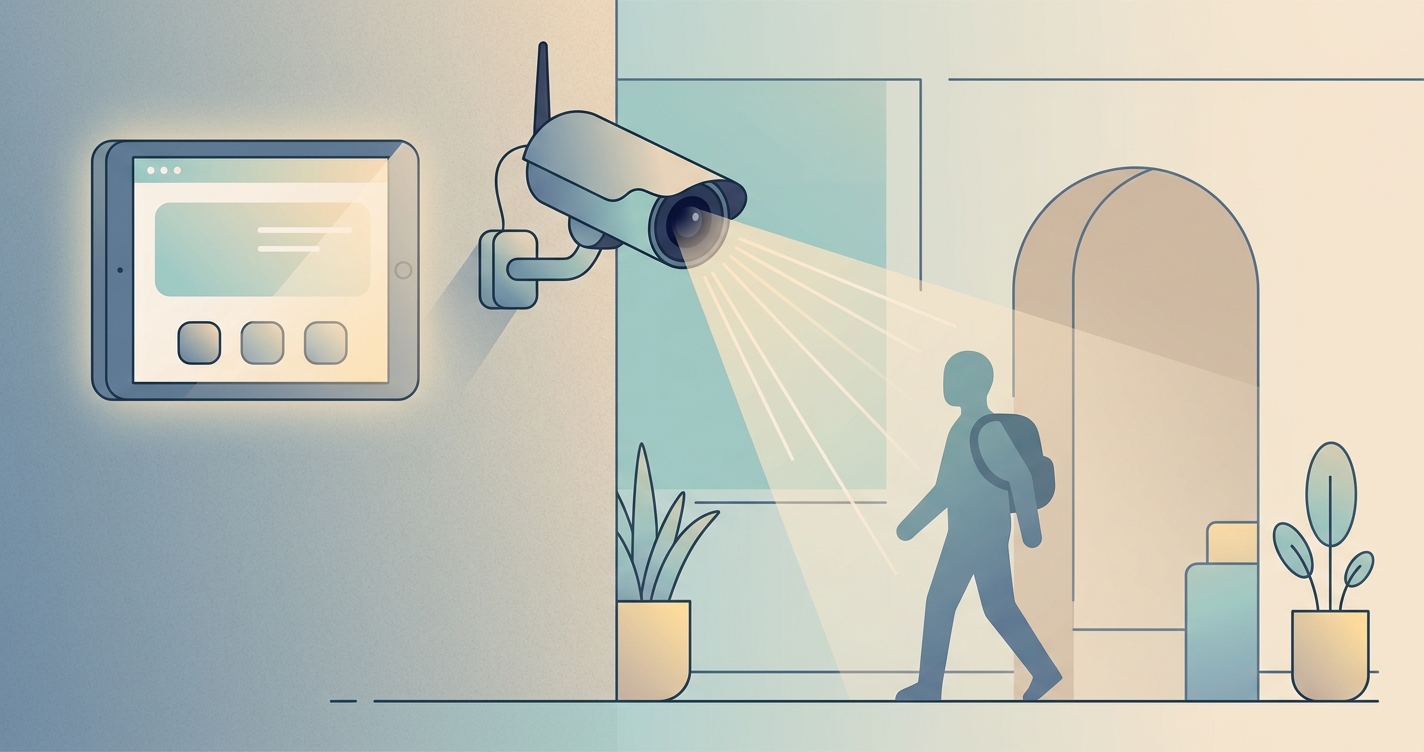
The proliferation of cameras into every corner of our environment has created a new frontier for passive health sensing. For hardware OEMs and IoT device makers, the possibility of enabling contactless vital signs monitoring through existing or planned cameras is a powerful value proposition. However, teams working on custom rPPG for tablet and fixed-camera deployment are discovering a hard truth: generic, one-size-fits-all rPPG models are not sufficient for production-grade accuracy and reliability. The unique and static characteristics of each camera system demand a more tailored approach.
"A 2021 study by Wang et al. found that rPPG accuracy can vary by as much as 15 beats per minute between different consumer-grade cameras under identical lighting conditions, highlighting the hardware-dependency of the signal."
The Challenge of Generalization in rPPG
Remote photoplethysmography (rPPG) works by detecting minute changes in light reflected from the skin, which correspond to the blood volume pulse. While the principle is straightforward, the signal is incredibly subtle and easily corrupted by noise. In the context of a custom rPPG tablet fixed camera deployment, the hardware itself is a primary variable. Unlike smartphone-based models that must generalize across thousands of device types, a fixed-camera system, like an information kiosk, a conference room display, or a bedside tablet, has a known, static sensor and lens configuration.
A generic model trained on a wide dataset of different cameras must make compromises. It learns to find a median signal, averaging out the unique noise profiles, color sensitivities, and image processing pipelines of individual devices. This "jack of all trades, master of none" approach leads to performance degradation when the model is deployed on a specific piece of hardware that deviates from the training data's average. Researchers like Humphreys et al. (2022) have emphasized the need for reproducible test environments to validate camera sensor responses, noting that variables in the image signal processing (ISP) chain can have significant impacts on rPPG algorithm performance. A custom-trained model, by contrast, is optimized for the exact hardware it will run on, treating the camera's specific characteristics as features to be leveraged, not noise to be ignored.
Generic vs. custom-trained rPPG models
For hardware teams, the choice between an off-the-shelf and a custom-built model has significant implications for product performance, user experience, and market differentiation.
| Feature | Generic rPPG Model | Custom-Trained rPPG Model |
|---|---|---|
| Training Data | Diverse data from many different cameras and lighting conditions. | Data captured exclusively from the target camera hardware. |
| Performance | Moderate accuracy; prone to errors from hardware variations. | High accuracy; optimized for the specific sensor and lens. |
| Robustness | Struggles with non-ideal lighting or distances specific to the use case. | Can be trained to be robust in the exact deployment environment. |
| Hardware Optimization | None. The model is hardware-agnostic and inefficient. | High. Can use specific hardware features for better performance. |
| Ideal Use Case | Consumer applications where high precision is not required. | Production hardware, clinical devices, and OEM integrations. |
Industry Applications
The need for a custom rPPG tablet fixed camera deployment strategy is evident across several key growth sectors for IoT and connected hardware.
Smart home and building automation
Imagine a smart home hub or apartment intercom that also provides passive wellness checks. A fixed, always-on camera in a living room or lobby can monitor residents' vital signs over time, detecting trends and potential health issues. This requires a model trained for that specific camera, at that specific distance, under the variable lighting conditions of that particular room. A generic model would be unreliable.
Public health and clinical kiosks
Point-of-care kiosks in pharmacies, clinics, and corporate wellness centers are a major application for rPPG. These devices need to deliver reliable measurements for a diverse population. A custom model trained on the kiosk's specific camera, accounting for its fixed height, distance, and typical overhead lighting, is critical for achieving the necessary accuracy for a health-related application.
Automotive in-cabin sensing
While driver monitoring systems (DMS) are a major focus, passenger monitoring in larger vehicles or future autonomous shuttles represents another fixed-camera scenario. Cameras embedded in seatbacks or cabin ceilings can monitor passenger wellness. Each of these camera positions has a unique field of view, distance to the subject, and exposure to cabin lighting, necessitating a custom-trained model for each specific integration.
Current research and evidence
The academic and research communities are increasingly focused on the problem of rPPG robustness and the impact of hardware variability. Studies are moving beyond simple heart rate extraction and tackling the more complex challenges of real-world deployment.
- Deep Learning for Noise Reduction: Research by Niu et al. (2020) demonstrated the use of deep learning models to isolate the rPPG signal more effectively from motion artifacts and lighting changes, a technique crucial for fixed cameras in uncontrolled environments.
- Sensor-Specific Signal Processing: A 2022 paper from Vostrukhov at the University of Twente explored how different CMOS sensor characteristics and their associated Image Signal Processors (ISPs) affect the raw PPG signal. Their work shows that pre-processing steps like digital gain and color correction, which vary between cameras, fundamentally alter the signal that the rPPG algorithm receives.
- Multi-Wavelength and IR Sensing: While most rPPG relies on the green channel of an RGB sensor, research is exploring the use of infrared (IR) and multi-wavelength cameras. These sensors, often found in fixed-camera systems for security or presence detection, require entirely new models custom-trained for their specific spectral responses.
This body of work confirms the central thesis for hardware OEMs: the camera is not a generic input device. It is an integral part of the measurement system, and its properties must be accounted for through custom model training.
The future of fixed-camera sensing
The trajectory is clear: as rPPG technology matures, the focus will shift from generalized models to highly specialized, application-specific solutions. For tablets and fixed-camera systems, this means a future where the rPPG model is as much a part of the hardware's bill of materials (BOM) as the camera sensor itself. We will see the development of automated training pipelines that can be deployed by OEMs to calibrate and create custom models for their devices with minimal overhead. This will unlock new product categories where passive, continuous, and frictionless health monitoring is a core feature, built-in from the ground up.
Frequently asked questions
Q: What are the main advantages of a custom-trained rPPG model for a fixed camera? A: The primary advantages are higher accuracy, greater reliability, and increased robustness. A custom model is optimized for the specific lens, sensor, and image processing pipeline of the target hardware, treating its unique properties as features rather than as noise. This is critical for production-grade deployments where performance matters.
Q: How does the type of camera sensor (e.g., CMOS vs. CCD, IR vs. RGB) impact rPPG performance? A: The sensor type has a fundamental impact. CMOS and CCD sensors have different noise profiles and readout mechanisms. Similarly, IR sensors capture blood flow dynamics differently than standard RGB cameras, requiring specialized models trained on IR-specific data to interpret the signals correctly. A model trained on an RGB camera will not work on an IR camera, and vice-versa.
Q: What are the key steps in a custom rPPG model development project? A: A typical project involves three main phases: 1) Data Collection, where a significant amount of video is captured from the target camera under various conditions, with synchronized ground-truth data from a medical-grade contact sensor; 2) Model Training, where this dataset is used to train a neural network to learn the relationship between the specific camera's video data and the physiological signals; and 3) Validation and Testing, where the model's performance is rigorously tested on a separate dataset to ensure accuracy and robustness.
For teams building products with unique hardware, a custom rPPG tablet fixed camera deployment is not just an advantage; it is a necessity. Circadify is at the forefront of creating these specialized models for hardware OEMs. If you are developing a device and need to ensure the highest level of rPPG performance, inquire about our custom builds and camera-specific training programs at circadify.com/custom-builds.