How to Choose a Camera Vitals Model Partner in 2026
A guide for OEMs and Tier-1 suppliers on evaluating a camera vitals model development partner for custom rPPG training and embedded health AI integration.
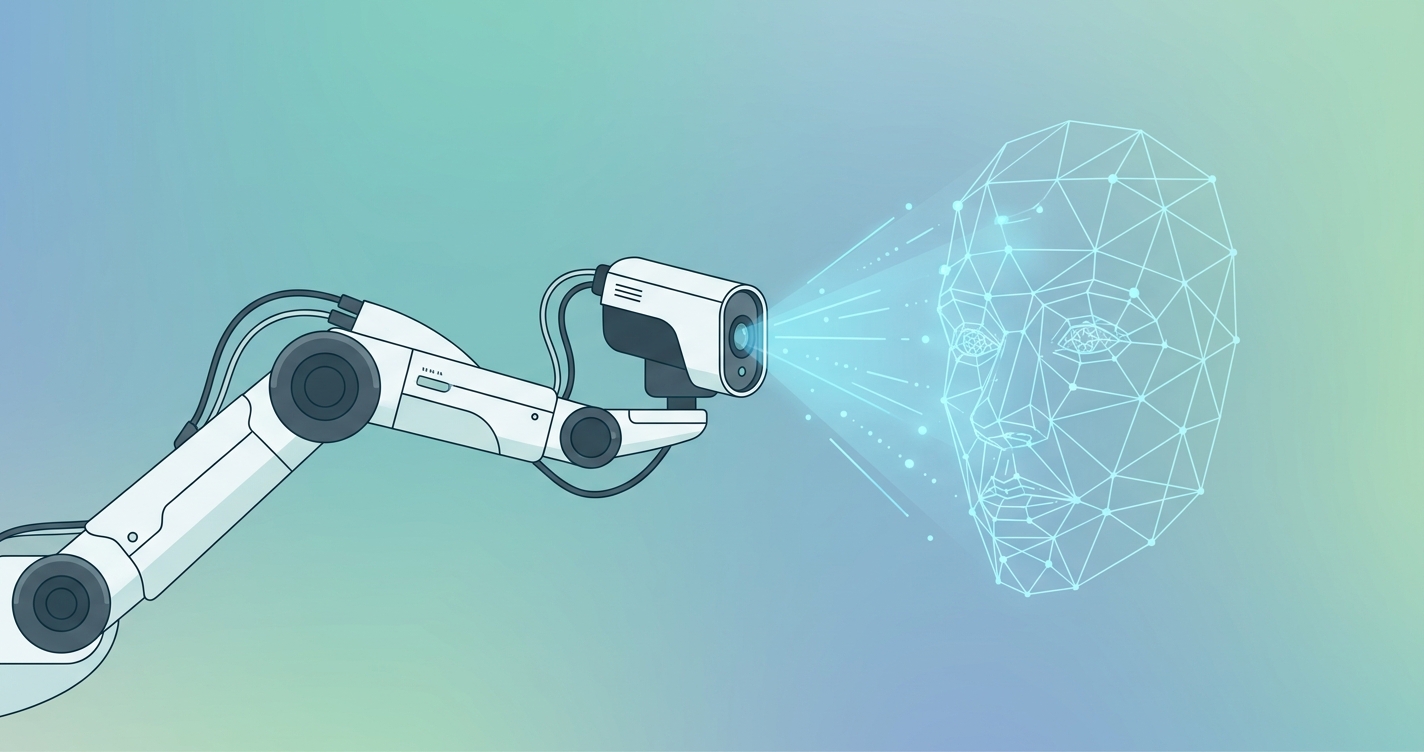
For hardware original equipment manufacturers and automotive Tier-1 suppliers, integrating contactless physiological measurement is no longer a speculative engineering exercise. It is a strict procurement requirement driven by safety mandates, telehealth expansion, and consumer demand. However, teams adding remote photoplethysmography (rPPG) to a hardware stack routinely discover a painful reality late in the development cycle. An algorithm that performs flawlessly on a standard smartphone camera in a well-lit software demo often fails entirely when deployed on a custom sensor embedded in a vehicle dashboard or a clinical kiosk. Bridging the gap between software demonstrations and production hardware requires more than an off-the-shelf license; it demands a dedicated camera vitals model development partner. Choosing the right vendor early prevents costly redesigns, regulatory delays, and poor end-user experiences.
"Deep learning models for remote photoplethysmography can achieve mean absolute errors as low as 1.95 beats per minute, but hardware variations such as camera sensor characteristics significantly impact signal quality and limit reproducibility without specific hardware adaptations." (Liu and McDuff, Researchers on EfficientPhys deep learning for rPPG, 2023)
Why you need a specialized camera vitals model development partner
The primary challenge of extracting micro-changes in skin color to measure heart rate or respiration is that the optical signal is incredibly fragile. A generic rPPG model is trained on publicly available datasets, which are overwhelmingly composed of standard RGB visible-light webcams capturing well-lit subjects facing the lens directly. When an engineering team attempts to run this generic model on an automotive infrared camera or a wide-angle security lens, the neural network cannot process the spatial and spectral differences in the video feed.
This is where a specialized camera vitals model development partner becomes absolutely necessary. Instead of providing a closed software development kit and hoping it works, a custom build partner works backwards from your specific hardware constraints. They analyze your sensor type, whether it is a standard complementary metal-oxide-semiconductor (CMOS) chip or a thermal imaging sensor, and factor in your exact frame rate, resolution, and edge computing limits.
The objective of custom rPPG model training is to create a tailored algorithm that understands exactly how your specific lens distorts light, how your image signal processor compresses color data, and how your specific user demographic will interact with the device. Without this highly customized approach, algorithmic accuracy drops sharply, particularly in challenging environments like moving vehicles or dimly lit hospital rooms. Relying on generic algorithms often forces hardware teams into endless cycles of software patching that never truly solve the underlying optical mismatch.
| Evaluation Metric | Generic Software Vendor | Camera-Specific Vitals Model Partner |
|---|---|---|
| Model Training Data | Standard consumer RGB webcam datasets | Custom datasets matching your exact lens and sensor |
| Hardware Optimization | Expects standardized inputs (720p, 30fps) | Built for specific frame rates, resolutions, and image processors |
| Spectral Support | Primarily visible light (RGB) | Infrared, near-infrared, and thermal imaging capable |
| Edge Computing Integration | Cloud-reliant or heavy processing loads | Pruned neural networks for embedded health monitoring AI |
| Deployment Timeline | Fast initial demo, long integration phase | Phased scoping, custom training, and hardware validation |
Key factors in evaluating a vitals model build partner
Selecting the right embedded health monitoring AI vendor requires asking highly technical questions during the initial procurement phase. A competent partner must demonstrate capability and operational transparency across the following areas:
- Skin Tone Validation: The vendor must provide evidence of testing across the entire Fitzpatrick scale (Types 1 through 6) to ensure the model does not fail on darker skin tones under your specific hardware and lighting conditions.
- Sensor Specificity: The vendor should request sample video data from your exact hardware prototype rather than relying on generic footage to train the camera-specific vitals model.
- Motion Artifact Mitigation: The training process must account for the natural movements your users will make, whether that involves turning a steering wheel or adjusting position during a telehealth consultation.
- Edge Computing Efficiency: The model architecture must be heavily optimized to run natively on the designated system-on-chip, keeping health data strictly on the device to maintain privacy compliance and reduce latency.
- Frame Rate and Resolution Calibration: The vendor must prove that their neural network can maintain accurate pulse signal extraction even if the system drops frames or dynamically reduces resolution to save power.
Industry applications for custom rPPG training
Different hardware verticals impose entirely different constraints on optical sensors. A reliable camera vitals model development partner will structure their training data to match the precise environmental realities of your specific industry application.
Automotive driver monitoring
In-cabin sensing systems face some of the most aggressive environmental changes of any hardware deployment. A vehicle experiences total darkness, blinding sunrise glare, and rapidly shifting shadows from passing trees. A generic rPPG model will fail immediately under these conditions. Automotive Tier-1 suppliers require custom rPPG model training specifically for near-infrared cameras, ensuring physiological extraction remains stable regardless of ambient visible lighting. The algorithm must also be robust enough to handle the constant vibration of the vehicle chassis.
Connected fitness and kiosks
Point-of-care kiosks and connected fitness mirrors operate in highly varied environments, from brightly lit pharmacy aisles to dimly lit home gyms. The hardware in these devices often prioritizes wide-angle viewing over pristine color fidelity. A vitals model build partner adjusts the neural network training pipeline to compensate for these specific lens distortions, allowing the system to track heart rate and respiratory rate accurately while the user is actively moving or standing off-center from the camera focal point.
Smart glasses and wearables
Wearable cameras introduce severe constraints on both battery life and thermal limits. Implementing a custom vital signs algorithm on smart glasses requires highly pruned neural networks. The vendor must focus entirely on spatial efficiency, stripping away unnecessary parameters so the rPPG model can process facial reflectance data without draining the battery or overheating the frame resting against the user.
Current research and evidence
The shift toward hardware-specific training is heavily supported by recent clinical engineering research. A 2025 study on designing reproducible test environments for rPPG highlighted that camera sensor response validation is a mandatory step in deploying contactless vitals. The researchers demonstrated that failure to account for the specific image processing pipeline of a given camera leads to catastrophic drops in the signal-to-noise ratio.
Similarly, research from Xin Liu and Daniel McDuff in 2023 on the EfficientPhys architecture proved that highly optimized deep learning models can achieve a mean absolute error of roughly 1.95 beats per minute, but only when the model architecture is strictly aligned with the computational and optical capabilities of the hardware.
Furthermore, 2024 evaluations of remote photoplethysmography in challenging environments confirm that accuracy drops sharply at elevated heart rates and low lighting unless the underlying model has been explicitly trained on data mimicking those exact edge cases. These academic findings validate the commercial reality for device manufacturers. Attempting to force generic software onto custom hardware is mathematically unsound. The neural network must possess a fundamental understanding of the physical sensor it relies on.
The future of camera vitals model development
As the market matures, the relationship between hardware manufacturers and algorithmic engineers will resemble traditional silicon integration. A camera vitals model development partner will be brought in during the early optical design phase rather than acting as a software patch after the hardware is finalized. By co-designing the sensor parameters and the custom rPPG model training simultaneously, engineering teams will push the boundaries of what passive physiological sensing can achieve.
Future models will increasingly rely on advanced multi-task learning, extracting heart rate, respiration, and potentially blood pressure correlates from a single optimized video stream. As these embedded health monitoring AI algorithms become more computationally efficient, they will migrate into smaller, lower-power devices. This migration will transform everyday items like laptops, smart home displays, and access control panels into capable health monitoring tools, making clinical-grade physiological observation a standard, invisible feature of the consumer and industrial environment.
Frequently asked questions
What is a camera vitals model development partner?
A specialized engineering vendor that builds and trains custom remote photoplethysmography algorithms tailored to a specific hardware setup. This ensures the software accurately interprets physiological data from a particular camera lens and image sensor rather than relying on generic assumptions.
Why is custom rPPG model training necessary?
Generic rPPG models are trained on standard webcams and optimal visible light. Custom training is required to maintain accuracy when using specialized hardware like infrared sensors, custom lenses, or embedded computing systems with strict memory constraints.
How do hardware variations affect contactless vital signs?
Every camera applies different color compression, exposure adjustments, and noise reduction algorithms. These automatic image processing steps alter the subtle pixel variations that rPPG relies on, causing generic models to fail if they are not specifically calibrated to the hardware.
How long does it take to build a camera-specific vitals model?
The timeline varies based on hardware complexity and data availability. It generally involves an initial hardware evaluation phase, followed by targeted data collection, custom neural network training, and strict validation testing to ensure accurate edge-case performance in the real world.
The technical gap between a software demonstration and a production-ready hardware deployment is entirely bridged by the quality of your algorithm training. Circadify is actively addressing this space by providing engineering teams with the exact neural network architectures needed to read physiology through specific lenses and sensors. If your team is evaluating hardware requirements and needs a specialized camera vitals model development partner to ensure your product functions accurately in the real world, explore our integration capabilities and schedule a scoping call today by visiting https://circadify.com/custom-builds.