
Can a Camera Measure Blood Pressure Without a Cuff?
An engineering deep dive into the realities of camera-based cuffless blood pressure monitoring, algorithmic challenges, and current rPPG research.
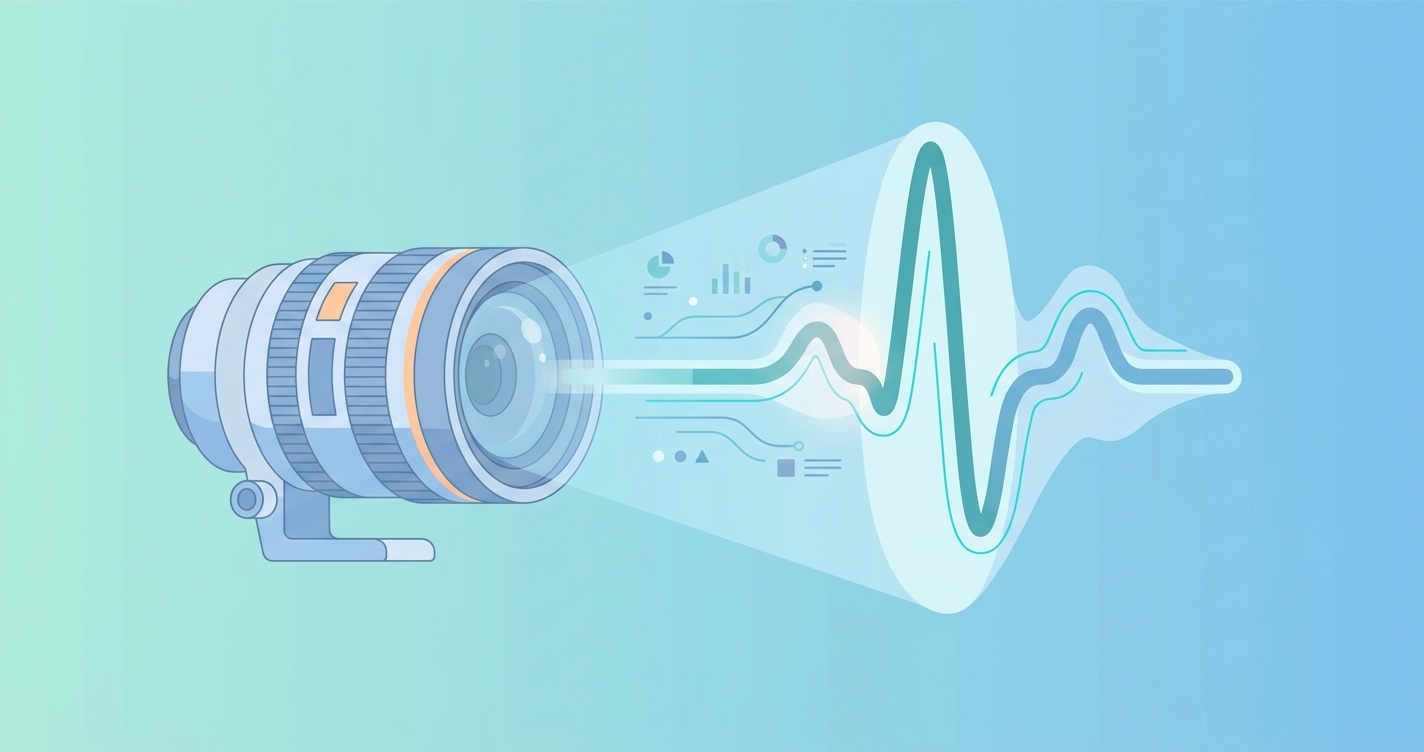
The holy grail for hardware original equipment manufacturers, automotive Tier-1 suppliers, and IoT device makers building health sensing products is achieving continuous, non-invasive cardiovascular monitoring. Whenever product and engineering teams review sensor specifications for smart mirrors, in-cabin automotive systems, or augmented reality wearables, the exact same question inevitably arises: can a camera measure blood pressure without a cuff? While extracting standard metrics like heart rate and respiratory rate from a video feed using remote photoplethysmography (rPPG) is now a well established engineering practice, estimating blood pressure introduces an entirely different magnitude of physiological and computational complexity. It requires moving beyond simple peak detection to analyzing the subtle morphology of the pulse wave and tracking micro-variations in blood volume across the microvascular bed. Understanding this technical leap is critical for hardware teams planning a product roadmap in the contactless health space.
"In a real world sample of ambulatory patients with cardiovascular disease, facial rPPG models identified subjects with systolic blood pressure greater than or equal to 130 mm Hg with a positive predictive value of 71 percent, demonstrating a viable pathway toward optical hypertension monitoring."
- Theodore Curran, Daniel McDuff, Shwetak Patel, et al., 2025
The reality of cuffless blood pressure sensing
When hardware teams attempt to build a cuffless blood pressure camera system, they often begin with a fundamental misunderstanding of what the camera is actually measuring. A camera does not and biologically cannot measure physical pressure. It measures volumetric changes in the microvascular bed under the skin, a signal known as the photoplethysmogram (PPG). During the cardiac cycle, systole pushes a wave of blood through the arterial network, which momentarily changes the light absorption and reflectance properties of the skin.
To translate this optical signal into a pressure reading (millimeters of mercury, or mmHg), a custom vital signs algorithm typically relies on two primary methodologies, both of which require exceptionally high fidelity data capture:
- Pulse Wave Analysis (PWA): This method examines the shape, amplitude, and specific inflection points (like the dicrotic notch and diastolic peak) of the rPPG waveform. Arterial stiffness and blood pressure changes alter how the blood volume pulse propagates through the vascular system, which subtly changes the waveform's shape. Extracting a waveform clean enough for PWA requires a sensor capable of capturing minute physiological changes without the muddying effects of aggressive image compression or auto-exposure adjustments.
- Pulse Transit Time (PTT) and Pulse Arrival Time (PAT): This technique measures the time it takes for a pulse wave to travel from the heart to a peripheral site like the face. Higher blood pressure generally causes the pulse wave to travel faster due to increased arterial stiffness. However, PAT requires a reference signal, usually a contact based electrocardiogram, to mark the exact moment of ventricular ejection, making a purely camera only approach incredibly difficult without secondary sensors.
Attempting to estimate blood pressure using generic, off-the-shelf software almost always fails during validation. Generic models are trained on narrow datasets and cannot account for the specific compression artifacts, lens distortion, or infrared noise profiles of a unique hardware setup.
Comparison: blood pressure measurement approaches
| Feature | Traditional Sphygmomanometer (Cuff) | Generic rPPG Software | Custom rPPG Model (Camera-Specific) |
|---|---|---|---|
| Measurement Type | Direct mechanical pressure | Optical pulse estimation | Optical pulse and wave morphology |
| User Experience | Intermittent, uncomfortable | Continuous, passive | Continuous, passive |
| Hardware Dependency | Physical cuff and pump | Agnostic (high failure rate) | Optimized for specific sensor and lens |
| Calibration Needs | Factory calibrated | Requires frequent recalibration | Tuned to specific hardware baseline |
| Integration Potential | Standalone devices only | High CPU and GPU overhead | Optimized for embedded edge AI |
Engineering challenges for contactless vitals monitoring
To capture a waveform clean enough for blood pressure estimation, hardware OEMs must engineer their systems to overcome several physiological and environmental barriers:
- Frequent Recalibration: Because the relationship between optical pulse signals and actual blood pressure varies based on arterial compliance, age, and smooth muscle contraction, algorithms often require a baseline calibration from a physical cuff.
- The Pre-Ejection Period (PEP): When using timing based methods, the physical delay between the electrical depolarization of the heart ventricles and the mechanical opening of the aortic valve introduces a variable that an optical sensor alone cannot easily measure.
- Signal to Noise Ratio (SNR): Extracting the dicrotic notch from a facial video feed requires exceptionally low compression, high frame rates (ideally 60fps or higher), and highly stable lighting conditions.
- Skin Tone Inclusivity: Melanin absorbs light differently across the optical spectrum. A model not explicitly trained on diverse Fitzpatrick skin types will exhibit higher error rates and signal degradation on darker skin tones.
Industry applications for cuffless sensing
As an IoT health sensing model becomes more sophisticated, several specific hardware verticals are pushing the boundaries of what camera based monitoring can achieve in the real world.
Automotive in-cabin sensing
Tier-1 automotive suppliers are rapidly integrating health monitoring into driver monitoring systems. While detecting drowsiness or basic heart rate is standard, tracking continuous cardiovascular stress through blood pressure estimation could trigger advanced safety protocols. Detecting a hypertensive crisis or sudden hypotensive drop before the driver feels impaired could drastically reduce medical related traffic accidents.
Smart mirrors and connected devices
Smart home device makers are embedding custom rPPG models into mirrors, displays, and bathroom scales. Because users interact with these devices at the exact same time every day, they provide an ideal environment for capturing longitudinal baseline data in controlled, predictable lighting, making calibration decay much easier to manage.
Wearables and smart glasses
For smart glass manufacturers, the skin contact area on the bridge of the nose or the temples provides a unique opportunity for direct or near contact optical sensing. However, capturing a stable rPPG signal from a wearable that moves dynamically with the user's head requires aggressive motion compensation. A dedicated model is required to separate the true physiological pulse wave from the heavy noise floor introduced by walking or speaking.
Current research and evidence
The technical feasibility of an accurate cuffless blood pressure camera system has accelerated dramatically in recent years. In a landmark 2025 study, researchers including Theodore Curran, Daniel McDuff, and Shwetak Patel published "Estimating Blood Pressure with a Camera: An Exploratory Study of Ambulatory Patients with Cardiovascular Disease."
Evaluating 143 subjects with established cardiovascular disease or specific risk factors, the researchers analyzed facial video recordings to map rPPG signals against clinical blood pressure readings. The dataset represented a much more realistic, challenging population than the healthy college students typically used in earlier optical studies. The study found that facial rPPG models could identify subjects with systolic blood pressure greater than or equal to 130 mm Hg with a positive predictive value of 71 percent. This suggests that while a camera may not yet output a perfect, continuous mmHg reading to replace a clinical cuff in the intensive care unit, it has immense diagnostic value for longitudinal hypertension monitoring in ambulatory patients.
However, other extensive reviews of multi-site photoplethysmography highlight a persistent engineering challenge: the decay of the calibration curve over time. Studies indicate that without regular recalibration, often required every few months due to physical changes in arterial stiffness, the Mean Absolute Error of optical blood pressure estimation drifts beyond the plus or minus 5 mmHg standard required by regulatory bodies.
The future of camera-based blood pressure
Achieving a viable camera-specific vitals model for blood pressure requires hardware makers to abandon the plug-and-play software mentality. The future of this technology lies in tightly coupled hardware and software ecosystems. To extract the minute waveform variations required for Pulse Wave Analysis, the AI model must be trained specifically on the exact CMOS or infrared sensor, lens profile, and image signal processor pipeline of the final device.
When a neural network understands the specific noise floor, quantum efficiency, and compression artifacts of the hardware it lives on, it can accurately filter out environmental noise and focus entirely on the physiological signal. As embedded edge computing becomes more powerful, enabling complex spatial temporal networks to run locally on-chip, the latency and privacy concerns of streaming uncompressed video to the cloud will disappear. This on-device processing will pave the way for ubiquitous, continuous cardiovascular sensing in our vehicles, homes, and clinical spaces.
Frequently asked questions
Can a standard webcam measure blood pressure? While a standard webcam can capture a basic heart rate via rPPG, estimating blood pressure requires extracting highly detailed pulse waveform morphology. Most off-the-shelf webcams use aggressive video compression and variable frame rates that destroy the subtle signal data needed for accurate blood pressure estimation without a custom trained algorithm.
Does camera based blood pressure require calibration? Currently, yes. Because the relationship between optical pulse data and physical blood pressure is unique to each individual's vascular stiffness and age, systems generally require an initial baseline calibration using a traditional blood pressure cuff, followed by periodic recalibration to prevent the algorithm's accuracy from drifting over time.
Is contactless blood pressure monitoring approved for clinical diagnosis? no purely camera based rPPG system has achieved full regulatory clearance as a standalone, cuffless blood pressure diagnostic device. Current technology is best positioned for wellness tracking, longitudinal trend monitoring, and early warning flagging rather than strict, isolated clinical diagnosis.
Integrating contactless vitals monitoring into a new hardware product is fundamentally a sensor engineering problem, not just a software integration. Circadify specializes in developing custom rPPG models that are natively optimized for your exact camera, lighting environment, and edge compute constraints. If you are a hardware OEM, automotive Tier-1 supplier, or IoT device maker exploring the feasibility of camera based cardiovascular sensing, standard algorithms will not survive real world testing. To discuss the engineering realities of your hardware roadmap and request a technical feasibility consult, explore our custom builds at circadify.com/custom-builds.