
5 Factors That Determine Custom rPPG Model Accuracy
Discover the 5 key factors that determine the accuracy of custom rPPG models, from camera sensor specifics to algorithmic processing. A guide for hardware OEMs.
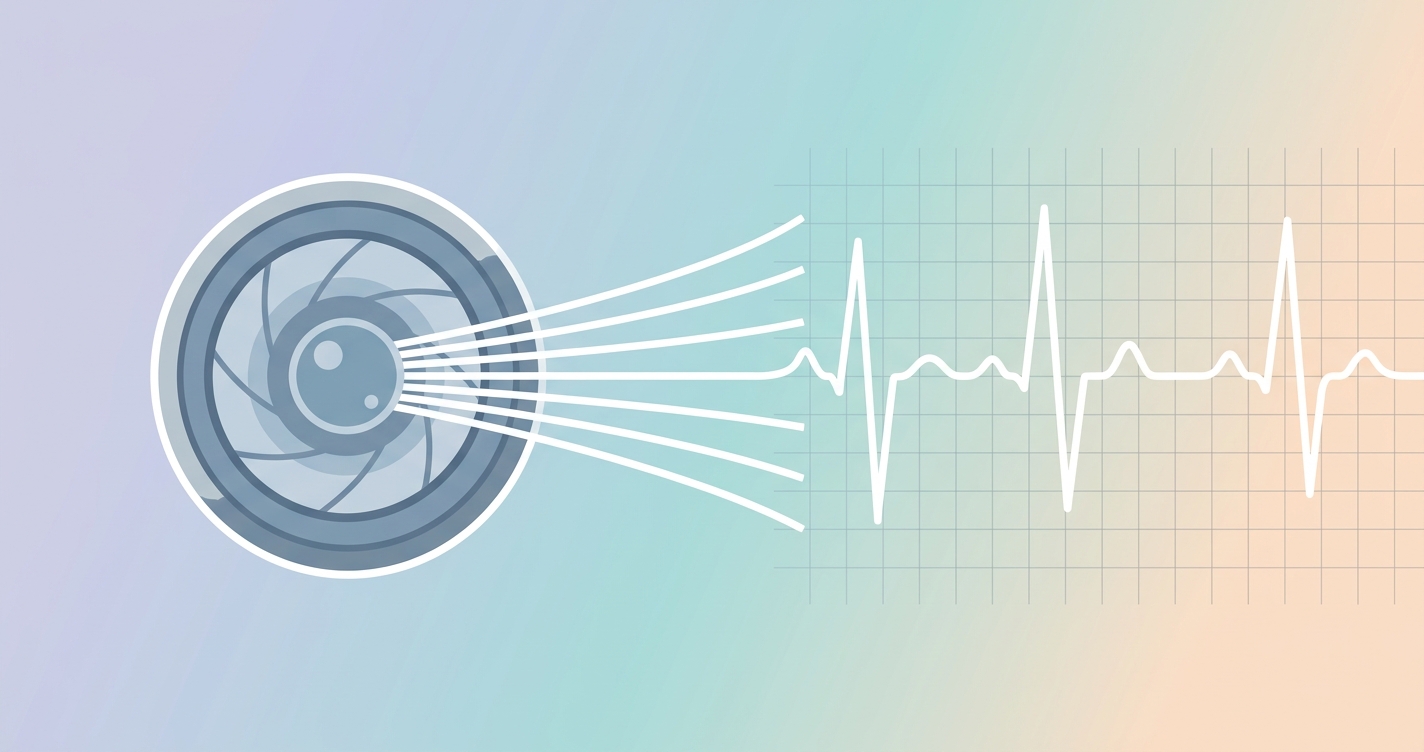
The performance of a remote photoplethysmography (rPPG) system is not accidental; it is the result of a complex relationship between hardware, software, and the operating environment. For hardware OEMs, automotive Tier-1 suppliers, and IoT device makers, understanding the nuances of what makes a custom rPPG model accurate is critical for product development and deployment. A model's ability to extract a clean blood volume pulse (BVP) signal from a video stream is highly dependent on the quality of the data it receives. This article explores the top five custom rppg model accuracy determining factors, providing a technical framework for evaluating and optimizing camera-based vital signs solutions.
"High-resolution cameras and good video quality are essential for capturing the subtle skin color changes rPPG relies on. A camera frame rate of at least 30 frames per second (fps) is generally recommended, with higher rates improving accuracy, especially for Heart Rate Variability (HRV) measurements."
The core determinants of rPPG model performance
The accuracy of an rPPG model is a function of its ability to detect minute changes in skin color caused by blood circulation. This process is sensitive to a variety of influences, many of which can be controlled or mitigated through custom model training and careful hardware selection. The primary factors that determine performance are the camera's imaging system, the stability of the subject and environment, and the sophistication of the signal processing algorithms. For teams building custom solutions, a deep understanding of these elements is the first step toward reliable, production-grade contactless sensing. One of the most critical of these are the custom rppg model accuracy determining factors inherent in the hardware and software design.
| Factor | High-Accuracy Impact | Low-Accuracy Impact | Mitigation Strategy |
|---|---|---|---|
| 1. Camera Sensor & Optics | High signal-to-noise ratio (SNR), low-light sensitivity, global shutter, high-quality IR cut filter. | High sensor noise, rolling shutter artifacts, poor spectral response in the green channel. | Select industrial-grade CMOS sensors; calibrate model for specific lens and sensor combination. |
| 2. Frame Rate & Resolution | 30fps or higher; 720p or higher resolution to ensure sufficient spatial and temporal data. | Sub-20fps rates miss key BVP signal dynamics; low resolution provides insufficient skin pixels. | Specify minimum camera performance; develop algorithms robust to lower frame rates if necessary. |
| 3. Illumination Conditions | Stable, diffuse, front-facing illumination (500-700 lux). | Low light, strong backlighting, fluctuating light sources (e.g., passing shadows), point light sources. | Use controlled NIR/IR illumination; train models on data captured in varied lighting scenarios. |
| 4. Subject Motion & Skin Tone | Stationary subject, minimal head and facial muscle movement. | Head rotation, talking, laughing, ambulation. Darker skin tones absorb more light. | Utilize motion cancellation algorithms; train models on diverse datasets representing various skin tones. |
| 5. Signal Processing Algorithm | Advanced techniques like deep learning (e.g., CNNs) for signal extraction and artifact removal. | Basic ROI-averaging methods (e.g., CHROM, POS) that are less robust to noise. | Employ transfer learning to adapt a base model to specific hardware and use cases. |
Industry applications and use case specifics
The relevance of each accuracy factor shifts depending on the deployment environment. Custom rPPG model training allows for optimization tailored to these specific conditions.
### automotive driver monitoring
In the automotive context, lighting is highly variable, ranging from direct sunlight to dark tunnels. Motion is also a constant challenge, with drivers turning their heads and talking.
- Key Factors: Illumination robustness and motion cancellation are the most critical custom rppg model accuracy determining factors.
- Solution: Models must be trained on extensive datasets captured in-cabin. Near-infrared (NIR) cameras are often preferred as they can be paired with controlled IR LED illumination, removing ambient light variability.
### clinical kiosks and telehealth
For clinical applications, conditions are more controlled. The user is typically seated and facing the camera directly.
- Key Factors: Sensor quality and resolution take precedence to capture the most subtle signals for potential diagnostic use.
- Solution: High-resolution CMOS sensors are ideal. The model can be fine-tuned for a narrow range of distances and lighting conditions expected in the kiosk or home setting.
### iot and smart home devices
IoT devices, such as smart mirrors or baby monitors, operate in unpredictable home environments.
- Key Factors: Low-light performance and the ability to handle intermittent motion are critical.
- Solution: Algorithms must be robust to noise. Custom models trained specifically for the IR or thermal camera in the device can significantly outperform generic models, especially at night.
Current research and evidence
The academic and industrial communities are actively working to improve rPPG accuracy. Research by Wang et al. (2017) demonstrated the effectiveness of deep learning models in outperforming traditional signal processing methods, especially in the presence of motion. More recently, studies have focused on the specific hardware attributes that yield the best results. A 2021 study by Nowara et al. published in CVF Open Access investigated camera exposure control, finding that manual adjustments can dramatically improve signal quality in low-light environments. Similarly, research into sensor-specific calibration has shown that accounting for the unique spectral response of a given CMOS sensor can reduce errors. This body of work underscores that while advanced algorithms are crucial, they cannot fully compensate for poor data acquisition. The best performance is achieved when the hardware, environment, and software are optimized in concert.
The future of custom rPPG models
The trajectory of rPPG technology is toward greater robustness and hardware independence. This will be achieved not by a single "one-size-fits-all" model, but by highly efficient methods for adapting a foundational model to new hardware. Techniques like transfer learning are central to this vision. A base model trained on millions of videos across hundreds of camera types can be rapidly fine-tuned on a smaller, specific dataset from a new device. This "custom build" approach allows hardware OEMs to use the power of a massive dataset while still achieving performance optimized for their unique camera, whether it's a high-end automotive sensor or a low-cost IoT camera. The future is not a single model, but a system for generating custom models on demand.
Frequently asked questions
-
Q: What is the most important factor for rPPG accuracy?
-
A: While all factors are interconnected, stable and sufficient lighting is often cited as the single most critical environmental condition. Without a good signal-to-noise ratio from the start, even the best algorithm will struggle.
-
Q: Can rPPG work in complete darkness?
-
A: Not with a standard visible-light RGB camera. However, it can work in visually dark environments by using near-infrared (NIR) or thermal cameras paired with corresponding invisible NIR/IR illumination.
-
Q: How much does motion affect rPPG accuracy?
-
A: Significantly. Head movements, talking, and facial expressions introduce severe artifacts into the signal. Advanced motion cancellation algorithms and custom model training on motion-heavy data are required to achieve accuracy in non-stationary use cases like driver monitoring.
-
Q: Is a higher camera frame rate always better for rPPG?
-
A: Generally, yes, up to a point. A frame rate of at least 30fps is recommended. Higher frame rates (e.g., 60fps) can provide more data points for the algorithm to analyze, which is particularly beneficial for extracting more complex metrics like Heart Rate Variability (HRV).
As the demand for contactless health sensing grows, understanding the custom rppg model accuracy determining factors is essential for any hardware team. Generic models provide a baseline, but production-grade performance requires a deliberate, customized approach. Circadify specializes in creating custom-trained rPPG models optimized for specific cameras, sensors, and use cases, addressing the challenges outlined here. To learn more about a custom build for your hardware, inquire at circadify.com/custom-builds.